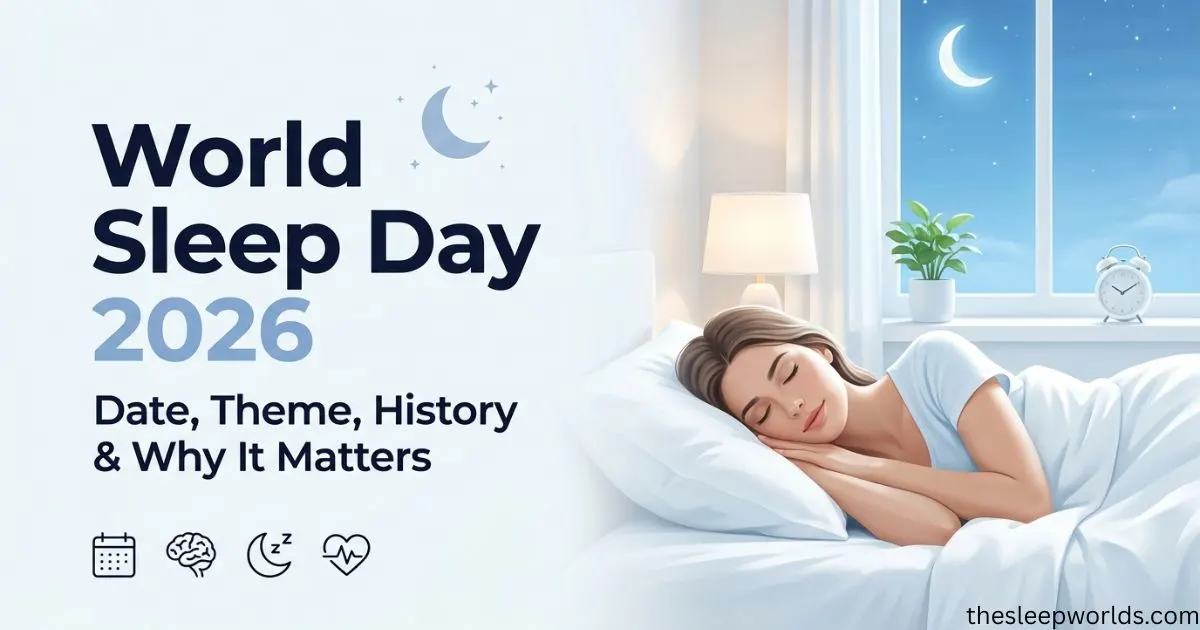
World Sleep Day 2026 Date, Theme, History & Why It Matters
World Sleep Day is an annual global awareness event that highlights healthy sleep, sleep health, sleep disorders, and the importance of restorative rest. In 2026, it was observed on Friday, March 13, with the theme “Sleep Well, Live Better.” Hosted by the World Sleep Society, the event connects sleep medicine, sleep research, healthcare professionals, and communities around a simple message: sleep is part of health, not an afterthought.
For readers in the United States, the message is especially relevant. Current CDC data show that 30.5% of U.S. adults slept fewer than seven hours on average in 2024. From an evidence-led editorial perspective, the real value of World Sleep Day is turning awareness into practical sleep habits, better sleep education, and informed conversations about persistent sleep problems.
World Sleep Day: When Is World Sleep Day 2026?
World Sleep Day 2026 was Friday, March 13, 2026. The annual observance is traditionally held on the Friday before the northern-hemisphere spring or vernal equinox, so its exact calendar date changes from year to year. The event remains centered on sleep health, education, awareness, and prevention of sleep-related problems.
That timing makes the observance easy to remember without confusing it with a fixed-date holiday. For anyone searching “World Sleep Day 2026,” the key facts are the date, the annual theme, the World Sleep Society connection, and the broader goal of encouraging healthier sleep. The official 2026 message was “Sleep Well, Live Better.”
World Sleep Day: The History of World Sleep Day
World Sleep Day began in 2008 as an international awareness initiative connected with sleep medicine professionals and researchers. The event was created to address the longstanding tendency to overlook sleep despite its relationship with health, safety, education, and quality of life. The World Sleep Society now hosts and organizes the global observance.
The first World Sleep Day took place on March 14, 2008, under the slogan “Sleep Well, Live Fully Awake.” Since then, annual slogans have addressed themes including healthy aging, sleep equity, regular sleep, and the essential role of sleep in health. This evolving history shows how sleep awareness has expanded from professional discussion into a broader public-health conversation.
World Sleep Day: The 2026 Theme: Sleep Well, Live Better
The 2026 World Sleep Day theme was “Sleep Well, Live Better.” The World Sleep Society used the message to emphasize that healthy sleep supports overall well-being and resilience. Its official guidance encouraged people to maintain regular sleep schedules, create relaxing sleep environments, and consider whether they feel rested during the day.
The theme also gives the observance a more personal meaning. Better sleep is not simply about spending more time in bed; sleep health involves adequate duration, quality, timing, regularity, and daytime alertness. For Americans struggling with short sleep, the message is a useful reminder that protecting sleep can be part of a broader healthy lifestyle.
World Sleep Day: Why Does World Sleep Day Matter?
World Sleep Day matters because sleep affects health, emotional well-being, daily functioning, and safety. The CDC states that good sleep is essential for health and recommends that adults ages 18–60 get at least seven hours per day. Yet U.S. data show that nearly one-third of adults had short sleep duration in 2024.
That gap between what people need and what many people actually get is where awareness becomes useful. World Sleep Day encourages conversations about sleep deprivation, insomnia, sleep apnea, sleep hygiene, and healthier routines. It also helps shift the cultural mindset away from treating exhaustion as normal and toward recognizing sleep as a fundamental component of health.
World Sleep Day: The Science of Sleep’s Impact
Sleep supports important biological and cognitive processes, including memory, learning, emotional regulation, physical restoration, and normal daytime functioning. The CDC notes that sufficient sleep and good sleep quality are both important for healthy sleep. Adults generally need at least seven hours, although sleep requirements vary by age.
The U.S. picture makes the issue concrete: in 2024, 30.5% of adults reported averaging fewer than seven hours of sleep in a 24-hour period. CDC data also found that about one in six adults had trouble falling asleep and about one in five had trouble staying asleep. These figures help explain why sleep awareness remains relevant beyond a single annual event.
World Sleep Day: How Sleep Week Is Celebrated Around the World
World Sleep Day brings together sleep experts, healthcare professionals, researchers, advocates, organizations, schools, workplaces, and communities. Activities can include educational programs, public discussions, awareness campaigns, clinical education, social-media outreach, and local events designed to make sleep health easier to understand and discuss.
The scale is genuinely international. The official 2026 World Sleep Day site reported more than 624 official delegates from 87 countries, with more than 350 activities reported from 60 countries. The World Sleep Society also recognizes activities that connect sleep science with real community engagement.
World Sleep Day: How to Celebrate World Sleep Day Personally
Celebrating World Sleep Day does not require a large event. A practical starting point is to look honestly at your own sleep schedule: Do you wake up refreshed? Are your bedtimes consistent? Does your bedroom support quiet, comfortable rest? Small, sustainable changes can make sleep health feel more achievable rather than overwhelming.
For a U.S. household, that could mean keeping a consistent bedtime and wake time, reducing disruptive nighttime habits, creating a comfortable sleep environment, and making sleep a visible priority alongside nutrition and physical activity. If ongoing sleep difficulties interfere with daily life, the CDC recommends discussing sleep problems with a healthcare provider rather than simply accepting persistent fatigue as normal.

World Sleep Day: International and Domestic Festivals
World Sleep Day activities differ according to local communities, professional organizations, schools, healthcare systems, and available resources. Around the world, delegates have organized educational sessions, public-awareness programs, school activities, workplace initiatives, expert talks, and community campaigns. The common thread is translating sleep science into something people can understand and use.
In the United States, 2026 activities included participation from sleep professionals, nonprofit organizations, educators, schools, and community advocates. The official U.S. activity listings show how the observance can address different audiences, including children, adolescents, families, patients, and healthcare professionals. That local flexibility is part of what makes the global campaign scalable.
World Sleep Day: The Future of Sleep Awareness and Advocacy
The future of sleep awareness is moving toward a broader understanding of sleep as a public-health issue rather than merely a personal lifestyle preference. Current conversations increasingly connect sleep with mental health, cardiovascular health, chronic disease, workplace performance, school schedules, sleep disorders, and access to appropriate sleep care.
The need for continued awareness is clear in U.S. data. Alongside short sleep duration, many adults report difficulty falling or staying asleep, while sleep-aid use is also common. World Sleep Day can therefore serve as an annual entry point into longer-term sleep education, earlier recognition of persistent problems, and stronger connections between communities and qualified sleep professionals.
World Sleep Day: Annual Celebration
World Sleep Day is observed every year on the Friday before the March or vernal equinox, which means the date changes annually. Its history of themes shows a continuing effort to address different dimensions of sleep health, from healthy aging and regular sleep to sleep equity and the 2026 message, “Sleep Well, Live Better.”
The enduring idea is simple: sleep deserves attention before a problem becomes a crisis. Whether someone marks the day by learning about sleep disorders, joining an educational event, improving a bedtime routine, or simply recognizing the value of restorative rest, the annual observance turns one day of awareness into an invitation to protect sleep throughout the year.
Conclusion
The strongest factual takeaway is simple: World Sleep Day is more than a calendar observance it is an annual global sleep-health awareness campaign. In 2026, it took place on March 13 under the theme “Sleep Well, Live Better,” with hundreds of delegates and activities helping translate sleep science into public awareness.
For a U.S. audience, the topic has genuine relevance. CDC data show that 30.5% of American adults averaged fewer than seven hours of sleep in 2024. That makes World Sleep Day a natural opportunity to move from awareness to practical action: understand sleep health, protect a consistent routine, recognize persistent problems, and seek appropriate professional guidance when needed.
FAQs
When is World Sleep Day?
World Sleep Day is held annually on the Friday before the northern-hemisphere vernal equinox. In 2026, it took place on Friday, March 13.
What was the World Sleep Day 2026 theme?
The 2026 theme was “Sleep Well, Live Better.” The message focused on making sleep health a meaningful part of overall health and well-being.
Who organizes World Sleep Day?
World Sleep Day is organized by the World Sleep Day Committee of the World Sleep Society, an international professional organization focused on sleep medicine, science, education, and advocacy.
Why is World Sleep Day celebrated?
It raises awareness of healthy sleep and the medical, educational, social, and public-health consequences of sleep problems. It also promotes prevention, better sleep education, and management of sleep disorders.
How can I celebrate World Sleep Day?
You can learn about sleep health, attend an educational event, share credible sleep information, review your own sleep routine, or participate in a local awareness activity. The official World Sleep Day program also provides resources for organizers and delegates.
How much sleep should adults get?
The CDC recommends that adults ages 18–60 get at least seven hours of sleep per day. Sleep needs vary by age, and sleep quality matters alongside duration.
Is World Sleep Day the same as National Sleep Day?
They are not necessarily the same observance. World Sleep Day is the internationally recognized annual event organized by the World Sleep Society. Searchers sometimes use “National Sleep Day” informally when looking for sleep-awareness information, so clarifying the official World Sleep Day date and organizer avoids confusion.

Rayan Foster is a curious and dedicated professional with an interest in digital content, lifestyle, and online research. He enjoys exploring useful ideas, learning about new topics, and sharing practical information with others. Rayan values continuous learning, creativity, and building meaningful connections through the digital world.