World Sleep Day 2025 Date March 14, Theme & Facts
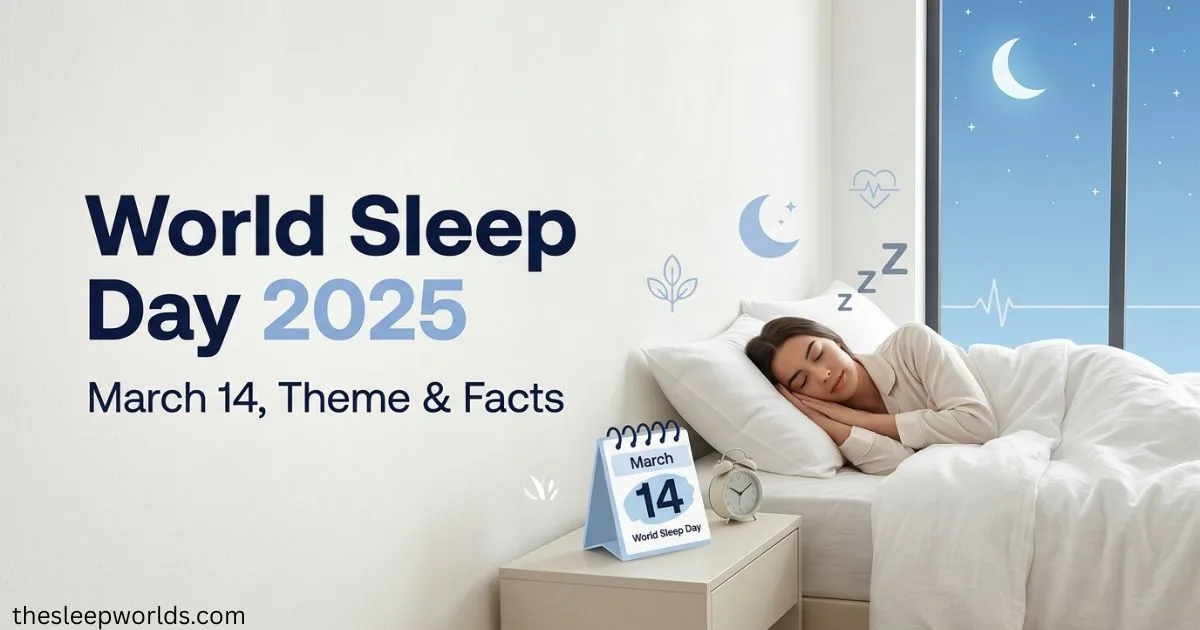
World Sleep Day 2025 was Friday, March 14, 2025, the annual awareness day focused on sleep health, healthy sleep habits, sleep disorders, and the importance of restorative rest. The date fell shortly before the spring equinox and was organized through the World Sleep Society’s global sleep-health initiative.
If you searched for the World Sleep Day 2025 date because you missed the event or are researching its history, you are not alone. After years of working with health-focused content, I’ve found that readers usually want three answers quickly: the exact date, the official theme, and why the observance matters. Here’s the complete picture, including its history, activities, and practical sleep-health context.
When is World Sleep Day 2025?
The World Sleep Day 2025 date was Friday, March 14, 2025. The observance traditionally takes place on the Friday before the northern hemisphere’s spring or vernal equinox. Calendar records confirm March 14 as the 2025 date, while the World Sleep Society also published March 14 as its official date.
The date matters because World Sleep Day is not simply a calendar observance. It connects sleep quality, sleep hygiene, healthy routines, and sleep disorders with broader health and well-being. For someone searching specifically for the 2025 date, the short answer is simple: Friday, March 14, 2025.
What is World Sleep Day and When is it Celebrated?
World Sleep Day is an internationally recognized awareness event created and hosted by the World Sleep Society. Its purpose is to build awareness of sleep health among researchers, healthcare professionals, patients, and the public while encouraging better prevention and management of sleep disorders.
The event is held annually and uses sleep awareness activities to encourage healthier conversations about insomnia, sleep apnea, sleep deprivation, and everyday sleep habits. Rather than treating sleep as optional downtime, the campaign presents healthy sleep as an important component of overall health and daily functioning.

What is the theme of World Sleep Day 2025?
The official theme for World Sleep Day 2025 was “Make Sleep Health a Priority.” This message emphasized that sleep deserves attention alongside other foundational aspects of health. The World Sleep Society published the theme in its 2025 materials and used it across worldwide awareness activities.
This theme is particularly relevant because healthy sleep involves more than simply counting hours. Sleep quality, regularity, timing, sleep environment, and untreated sleep disorders can all influence the experience of restorative rest. The 2025 campaign therefore connected everyday sleep behavior with the larger concept of sleep health.
Significance of World Sleep Day
The significance of World Sleep Day comes from its effort to make sleep health part of everyday health conversations. Sleep supports processes involving memory, learning, immune function, emotional regulation, and physical recovery, while persistent sleep problems can interfere with daytime functioning and quality of life.
It also gives healthcare professionals, researchers, schools, workplaces, and communities an opportunity to discuss sleep disorders that can otherwise go unnoticed. Insomnia, sleep apnea, restless legs syndrome, and other conditions can affect sleep quality and daytime alertness, making awareness and appropriate medical evaluation important.
Why is World Sleep Day Important?
World Sleep Day is important because sleep is closely connected with physical and mental well-being. Poor sleep can affect concentration, mood, memory, productivity, and daily safety, while persistent sleep problems may be associated with broader health risks. The observance encourages people to recognize sleep as a health issue rather than simply a lifestyle preference.
World Sleep Day History
World Sleep Day was first held in 2008 under the slogan “Sleep Well, Live Fully Awake.” The initiative developed into an international awareness campaign associated with the World Sleep Society, with annual themes addressing different aspects of sleep health.
The themes have changed over time. Examples include “Healthy Sleep, Healthy Aging” in 2019, “Better Sleep, Better Life, Better Planet” in 2020, “Sleep is Essential to Health” in 2023, “Sleep Equity for Global Health” in 2024, and “Make Sleep Health a Priority” in 2025.
How can I take part in World Sleep Day 2025?
People could participate in World Sleep Day 2025 by attending or organizing educational events, sharing reliable sleep-health information, joining awareness activities, or using the official World Sleep Day resources. The World Sleep Society provides a toolkit intended to help organizations and communities plan activities.
Worldwide participation took many forms, including lectures, webinars, community programs, broadcasts, sleep education and social-media campaigns. The World Sleep Society reported that more than 600 delegates from over 70 countries participated in World Sleep Day 2025 activities.

World Sleep Day Activities – How to Celebrate
A simple way to observe World Sleep Day is to turn awareness into one practical change. That might mean establishing a consistent bedtime, reducing late-night screen exposure, creating a quieter bedroom, or learning about a sleep problem that has been affecting you or someone you care about.
Organizations can also host sleep-health seminars, distribute educational resources, invite sleep professionals to speak, or create awareness campaigns. In 2025, activities around the world included conferences, webinars, educational sessions, media outreach, sleep challenges, and community events.
How to sleep better
Better sleep often begins with consistency rather than a complicated routine. Going to bed and waking at reasonably consistent times, creating a comfortable sleep environment, limiting stimulating activities close to bedtime, and giving yourself enough opportunity for sleep are practical starting points.
If sleep remains difficult despite reasonable habits, the issue may not be a simple bedtime-routine problem. Persistent insomnia, loud snoring, breathing interruptions, excessive daytime sleepiness, or other unusual symptoms can warrant discussion with a healthcare professional because an underlying sleep disorder may need evaluation.
Wind down
A wind-down period can help separate the demands of the day from bedtime. Relaxing activities, a predictable routine, and reducing stimulating activities can make the transition toward sleep easier. The Standard also recommends avoiding caffeine close to bedtime and using a routine that signals to the body that sleep is approaching.
Keep it consistent
Consistency is one of the simplest foundations of sleep hygiene. Keeping a regular sleep schedule helps align the body’s internal timing with expected sleep periods. Instead of chasing a different bedtime every night, a stable routine can make sleep easier to anticipate and protect.
Tech-no
Phones, tablets and computers can become surprisingly persistent bedtime distractions. Creating some distance from screens before sleep can help establish a calmer transition into bedtime. A practical approach is to reduce stimulating digital activity and make the final part of the evening intentionally quieter.
Fit and healthy
Physical activity can support healthy sleep, particularly when combined with a consistent daily routine. The Standard recommends exercising earlier in the day and using lighter stretching before bed. The goal is not to exhaust yourself at night but to maintain healthy daytime activity and recovery habits.
The World Sleep Society: Leading the Charge in Sleep Health
The World Sleep Society is the organization behind World Sleep Day and focuses on advancing sleep health worldwide. Its work includes professional education, research, clinical guidance, awareness campaigns, and resources intended for healthcare professionals and the public.
Its role also explains why World Sleep Day extends beyond a single annual date. The campaign creates a recurring opportunity to connect scientific research, clinical sleep medicine, public education, and community awareness. That broader ecosystem gives the March observance meaning beyond simply marking a day on the calendar.
Shining a Light on Sleep Disorders and Their Far-Reaching Effects
World Sleep Day also highlights common sleep disorders, including insomnia, sleep apnea, restless legs syndrome, and narcolepsy. These conditions can affect sleep continuity, daytime alertness, concentration, mood, safety, and quality of life. Recognizing persistent symptoms is an important part of taking sleep health seriously.
For example, someone who repeatedly wakes exhausted despite spending sufficient time in bed may need more than generic sleep tips. Persistent symptoms, breathing interruptions during sleep, severe daytime sleepiness, or ongoing difficulty falling or staying asleep can be reasons to seek professional evaluation rather than simply accepting poor sleep as normal.
Conclusion
The World Sleep Day 2025 date was Friday, March 14, 2025, and the official theme was “Make Sleep Health a Priority.” The day brought attention to healthy sleep, sleep disorders, sleep education, and the wider relationship between restorative rest and health.
Although the 2025 observance has passed, its central message remains useful: sleep is a health priority, not an afterthought. If your original search was simply to confirm the date, the answer is March 14, 2025. If it was prompted by ongoing sleep difficulties, use the occasion as a reminder to take persistent symptoms seriously and seek appropriate professional guidance.
FAQs
When was World Sleep Day 2025?
World Sleep Day 2025 was held on Friday, March 14, 2025. It followed the annual scheduling pattern of taking place on the Friday before the spring or vernal equinox.
What was the World Sleep Day 2025 theme?
The official 2025 theme was “Make Sleep Health a Priority.” The World Sleep Society used this message to emphasize the importance of sleep health and healthy sleep practices.
Who organizes World Sleep Day?
World Sleep Day is organized through the World Sleep Society and its World Sleep Day Committee. The initiative connects sleep researchers, healthcare professionals, patients, advocates and the wider public.
Why is World Sleep Day celebrated?
World Sleep Day raises awareness about healthy sleep, sleep disorders and the importance of sleep for overall well-being. It also promotes better prevention, recognition and management of sleep problems.
When is World Sleep Day usually observed?
World Sleep Day is traditionally observed on the Friday before the spring or vernal equinox in the northern hemisphere. Because the equinox date changes slightly each year, the World Sleep Day date also changes.
What are common sleep disorders?
Common conditions highlighted in World Sleep Day materials include insomnia, sleep apnea, restless legs syndrome and narcolepsy. Persistent symptoms should be discussed with an appropriate healthcare professional rather than self-diagnosed from general online information.
How can I celebrate World Sleep Day?
You can observe World Sleep Day by learning about sleep health, improving your sleep routine, sharing reliable educational information, attending an awareness event, or encouraging conversations about sleep disorders and healthy sleep habits.
Is World Sleep Day the same date every year?
No. It generally falls on the Friday before the spring equinox, so the calendar date changes. For example, it was March 14 in 2025 and March 13 in 2026.

Rayan Foster is a curious and dedicated professional with an interest in digital content, lifestyle, and online research. He enjoys exploring useful ideas, learning about new topics, and sharing practical information with others. Rayan values continuous learning, creativity, and building meaningful connections through the digital world.