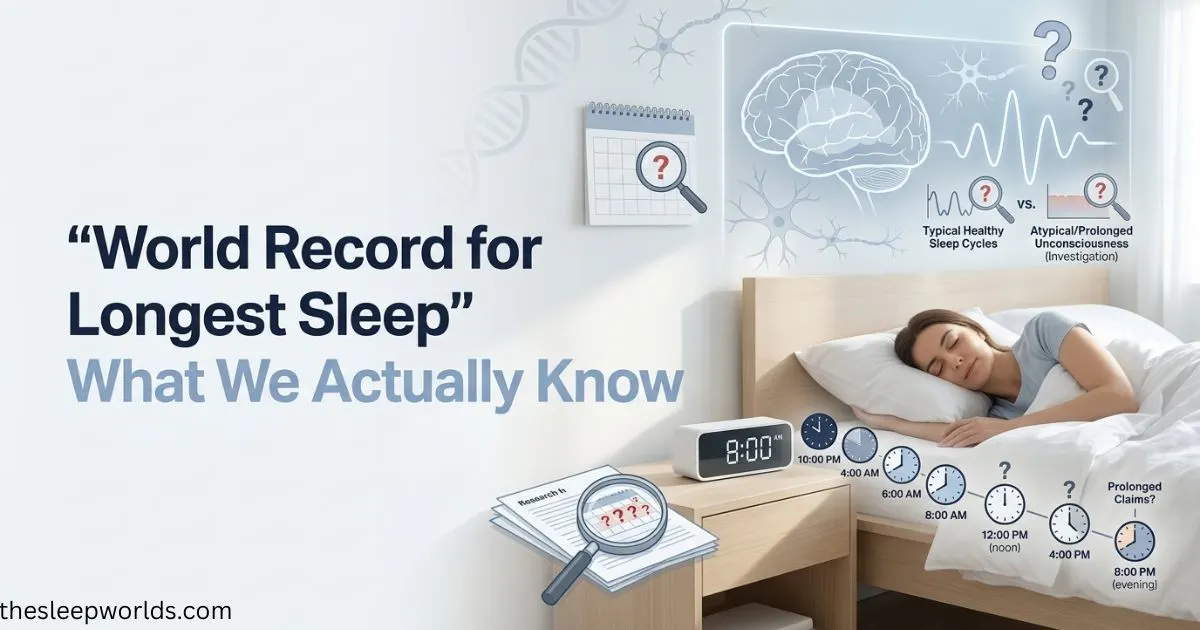
World Record for Longest Sleep What We Actually Know
There is no current Guinness World Record for the longest time a person has slept, and that distinction matters. Searches for a world record for longest sleep often mix together sleep, prolonged unconsciousness, medical hypersomnia, and the better-documented record for staying awake. Guinness says it does not monitor a longest-sleep category because verifying whether someone is genuinely asleep is difficult.
For anyone fascinated by extreme sleep, the real story is more interesting than a single number. Medical literature describes rare cases involving Kleine-Levin syndrome, hypersomnia, neurological disorders, and prolonged unconscious states. At the same time, Randy Gardner’s famous sleep-deprivation experiment gives us one of the best-known documented examples of extreme wakefulness.
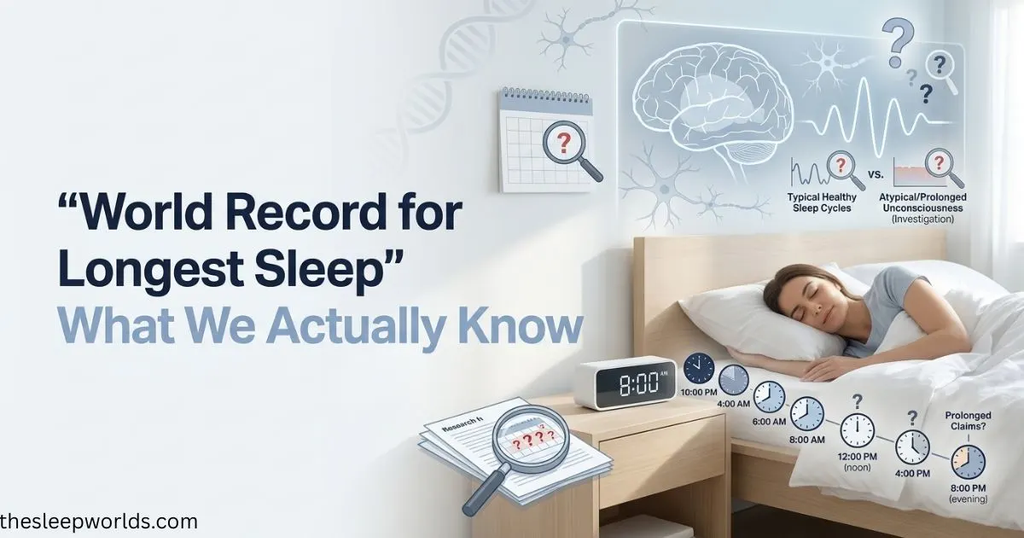
What’s the world record for sleeping / not sleeping?
For the world record for longest sleep, there is currently no Guinness-recognized record for the longest continuous period of ordinary sleep. Guinness specifically says it does not measure this category because determining whether someone remains genuinely asleep is not reliably possible. The organization formerly monitored longest-duration wakefulness, but discontinued the category because of safety concerns.
The opposite record is much easier to document. Randy Gardner remained awake for 264 hours and 1 minute, approximately 11 days, during a monitored 1963–1964 sleep-deprivation experiment. Guinness also reports that Robert McDonald went 453 hours and 40 minutes, or 18 days and 21 hours, in 1986.
That difference explains why online answers can be confusing. A website may call an eight-day hypnotic episode a “longest sleep record,” while another discusses a medically documented hypersomnia episode. Neither necessarily represents an official Guinness world record. Bensons for Beds, for example, describes an eight-day hypnotic-sleep claim involving Peter Powers, but Guinness’s current position is that it does not monitor a longest-sleep record.
What Is The Longest A Human Has Ever Slept?
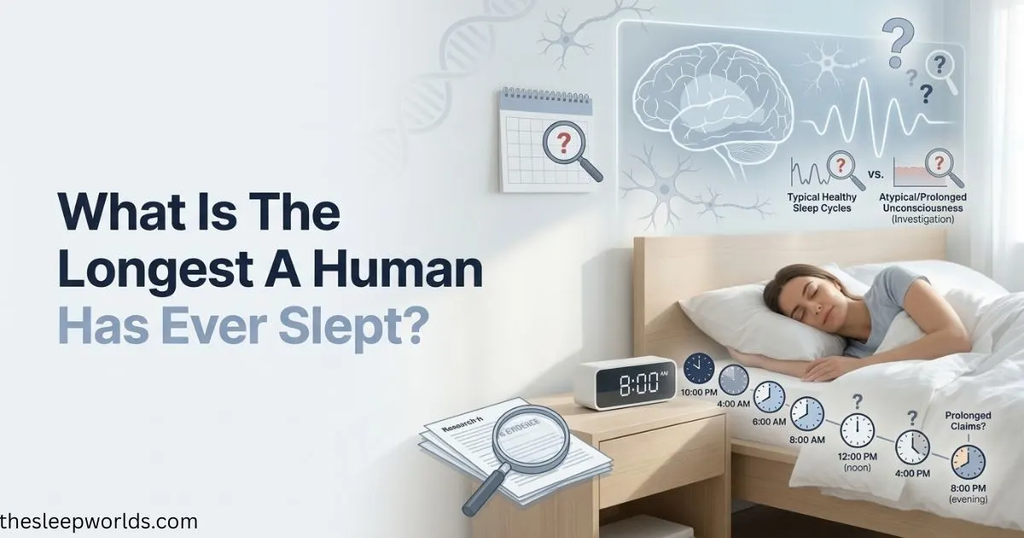
There is no scientifically established single number that can honestly be called the longest human sleep ever. The problem is that extreme cases frequently involve repeated brief awakenings, altered consciousness, neurological illness, medication, injury, or states that are not physiologically equivalent to normal sleep. Medical records therefore describe episodes rather than a universally accepted “sleep champion.”
One of the most important examples is Kleine-Levin syndrome (KLS). During an episode, affected people can sleep for roughly 12 to 24 hours a day, often for several days or weeks, while experiencing confusion, altered behavior, excessive eating, or other neurological and psychiatric symptoms.
The distinction is crucial. Someone sleeping 18 hours a day during a KLS episode is not simply enjoying an extraordinarily long nap. KLS is a rare neurological disorder characterized by recurrent episodes of profound hypersomnia, with people generally returning toward their baseline between episodes.
So when someone asks for the world record for longest sleep, the scientifically responsible answer is not “X days.” The better answer is that no official continuous-sleep record exists, while documented medical conditions can produce exceptionally long periods of sleep or near-sleep states.
Is It Possible To Sleep For Days Without Waking Up?
It is possible for someone with a severe sleep disorder to remain in bed for days while spending much of that time asleep, but “without waking up” is usually an oversimplification. People experiencing extreme hypersomnia may briefly awaken to eat, drink, use the bathroom, or respond to other stimuli before returning to sleep.
Kleine-Levin syndrome provides the clearest example. During episodes, patients can sleep up to approximately 20 hours per day. These episodes typically last days to weeks, although the medical literature documents considerable variation.
This is different from a person simply deciding to sleep through an entire weekend. Normal sleep is organized into repeating cycles involving non-REM and REM stages, coordinated partly by circadian and homeostatic processes. Extreme prolonged unconsciousness can involve fundamentally different neurological circumstances.
That is why viral stories about somebody supposedly sleeping continuously for weeks should be treated cautiously. A headline may use “slept” as shorthand for an extended period of unresponsiveness, but medically, sleep, coma, and other disorders of consciousness are not interchangeable terms.
What Causes Someone To Sleep For Weeks At A Time?
Weeks-long periods of extreme sleepiness can have several explanations, including Kleine-Levin syndrome, neurological injury, post-infectious illness, psychiatric conditions, and other disorders of hypersomnolence. The cause cannot be determined simply by counting hours in bed; clinicians look at symptoms, medical history, patterns of recurrence, cognition, behavior, and objective testing.
KLS is especially notable because episodes can involve profound hypersomnia alongside cognitive and behavioral changes. Research describes altered perception, confusion, apathy, memory problems and, in some patients, changes in appetite or behavior. Between episodes, many patients return toward normal functioning.
Brain injury and other neurological conditions can also disrupt the systems responsible for maintaining wakefulness. Historical medical literature contains cases of prolonged sleep-like states associated with neurological disease, although these should not automatically be counted as examples of ordinary sleep.
The practical lesson is simple: an unusually long sleep episode is not automatically a record-breaking achievement. It can instead be a medical symptom. If extreme sleepiness appears suddenly, repeatedly, or alongside confusion or major behavior changes, professional medical evaluation is more appropriate than attempting to measure it as a record.
What Is Kleine-Levin Syndrome And How Long Can Episodes Last?
Kleine-Levin syndrome is a rare neurological disorder characterized by recurring episodes of profound hypersomnia. During an episode, a person may sleep around 15 to 21 hours a day or, according to some clinical sources, up to approximately 24 hours a day, with episodes commonly lasting days to weeks.
The disorder is particularly associated with adolescents and is more common in males, although it can affect females and people outside the typical age group. Symptoms can include cognitive impairment, confusion, derealization, excessive eating, irritability, and unusual behavior.
Importantly, KLS is not evidence of a “sleeping record.” It is a medical condition. Research describes episodes as relapsing and remitting, meaning affected individuals may return to relatively normal sleep and behavior between attacks.
This is one reason KLS belongs in any serious discussion of extreme sleep duration. It gives us a medically documented explanation for why someone can spend extraordinary amounts of time asleep without implying that humans can safely train themselves to sleep continuously for weeks.
Can You Die From Sleeping Too Much?
Sleeping for an unusually long period is not equivalent to simply getting a little extra rest after a busy week. The medical concern depends heavily on why the person is sleeping so much, whether the pattern is persistent, and whether other symptoms are present. Chronic excessive sleep can be associated with underlying health problems rather than being a harmless “superpower.”
The American Academy of Sleep Medicine recommends that healthy adults regularly obtain at least seven hours of sleep, while also noting that more than nine hours can be appropriate for some people, including young adults, people recovering from sleep debt, and people with certain illnesses.
Extreme immobility presents additional concerns. Medical conditions causing prolonged unconsciousness or very limited movement can create complications that are completely different from ordinary restorative sleep. That is another reason why a multi-day medical episode should never be treated as a sleep challenge.
For the same reason, people should not attempt to create their own “longest sleep” experiment through sedatives, medication, alcohol, or other substances. The absence of an official Guinness category is not an invitation to manufacture one.
Is Oversleeping A Sign Of A Serious Medical Condition?
Sometimes it can be. Consistently sleeping substantially longer than expected, especially when accompanied by unrefreshing sleep, daytime sleepiness, confusion, loud snoring, breathing problems, or sudden episodes, can warrant discussion with a healthcare professional.
Possible explanations range from insufficient-quality sleep and sleep apnea to depression, medications, neurological disorders and central hypersomnolence disorders. Importantly, sleeping longer on an occasional weekend does not automatically indicate disease. Context and persistence matter.
Kleine-Levin syndrome is one specific example, but it is extremely rare. Other hypersomnolence disorders can produce prolonged sleep and severe difficulty waking without creating a “record.” Medical diagnosis depends on the overall pattern rather than an impressive number of hours.
If someone suddenly becomes difficult to wake, develops confusion, has a major change in behavior, or appears medically unwell, the appropriate response is medical assessment—not trying to calculate a world record.

Sleep Records And What They Reveal About Human Limits
Sleep records reveal an interesting contradiction: the most famous sleep-related record is actually about not sleeping. Randy Gardner’s 1964 experiment demonstrated just how extreme voluntary sleep deprivation could become, while later record attempts pushed the category into increasingly dangerous territory. Guinness eventually stopped monitoring it.
By contrast, prolonged sleep is much harder to define and verify. Guinness says it does not measure the longest time sleeping because an observer cannot reliably establish whether someone is genuinely asleep or pretending to be asleep. That measurement problem is fundamental to the record question.
The medical record tells a different story. People with KLS and other disorders can experience episodes lasting days or weeks, sometimes spending 18 or more hours per day asleep. These cases demonstrate the limits of normal sleep regulation without creating an official world-record category.
The biggest takeaway is therefore not a spectacular number. It is the difference between verified records, medical case reports, internet folklore, and states of unconsciousness. Once those categories are separated, the answer becomes much clearer.
Quick Fact Table
| Question | Evidence-based answer |
| Official Guinness record for longest sleep? | No current monitored record |
| Why not? | Sleep cannot be reliably verified continuously |
| Famous longest wakefulness experiment? | Randy Gardner — 264 hours, 1 minute |
| Longer historical wakefulness record cited by Guinness? | Robert McDonald — 453 hours, 40 minutes |
| Can people sleep for days? | Yes, particularly in rare medical conditions |
| Key disorder associated with extreme hypersomnia? | Kleine-Levin syndrome |
| Does KLS mean someone is asleep continuously? | Not necessarily; brief awakenings can occur |
| Is coma the same as sleep? | No |
| Should someone attempt an extreme sleep record? | No; extreme sleep/wake experiments can be dangerous |
Conclusion
The world record for longest sleep does not have a verified current Guinness number. Guinness World Records says it does not monitor the longest-sleep category because continuous sleep cannot be reliably verified.
What does exist are fascinating medical cases involving prolonged hypersomnia, particularly Kleine-Levin syndrome, where people may sleep for most of the day over episodes lasting days or weeks. These cases are medical phenomena, not conventional world records.
And if you encounter a claim that somebody slept continuously for weeks or months, look for the underlying evidence: Was it medically documented? Were there periods of wakefulness? Was the person in a coma or another altered state? Was the claim officially recognized?
Those questions matter more than the headline number and they separate genuine sleep science from internet mythology.
FAQs
What is the world record for longest sleep?
There is no current Guinness World Record for the longest time spent sleeping. Guinness says it does not monitor the category because it is difficult to verify continuously whether a person is actually asleep.
What is the longest someone has slept without waking up?
There is no universally verified world record for uninterrupted ordinary sleep. Some rare medical conditions can cause people to sleep for most of the day across multiple days or weeks, but those episodes can include brief awakenings and should not automatically be described as continuous sleep.
Who holds the longest sleep record?
No person currently holds an official Guinness record for the longest sleep. Some websites identify Peter Powers with an eight-day hypnotic-sleep claim, but that should not be confused with a current Guinness-recognized record.
Can a person sleep for days?
Yes. Rare neurological disorders such as Kleine-Levin syndrome can cause episodes in which a person sleeps up to around 20 hours per day for days or weeks.
What is the longest time a person has stayed awake?
Randy Gardner remained awake for 264 hours and 1 minute, approximately 11 days, during a documented 1963–1964 experiment. Guinness later stopped monitoring the category because of the dangers of sleep deprivation.
What is Kleine-Levin syndrome?
Kleine-Levin syndrome is a rare disorder involving recurring episodes of extreme sleepiness, often accompanied by cognitive and behavioral changes. People can sleep approximately 15–21 hours per day during episodes, which can last days to weeks.
Is sleeping for 20 hours a day normal?
Not generally for a healthy adult. During rare medical conditions such as KLS, however, extreme hypersomnia can occur. Persistent or sudden excessive sleepiness should be discussed with a healthcare professional.
Is sleeping for several days the same as being in a coma?
No. Sleep is a normal, organized physiological state, whereas coma is a disorder of consciousness. Some stories described online as “sleeping for weeks” may actually involve medical states that are not ordinary sleep.
Related Articles

Ryan Foster is a curious and dedicated professional with an interest in digital content, lifestyle, and online research. He enjoys exploring useful ideas, learning about new topics, and sharing practical information with others. Ryan values continuous learning, creativity, and building meaningful connections through the digital world.