
Sleep but Not Sleep Why You Feel Awake All Night
Feeling like you slept but never truly fell asleep can be confusing and frustrating. You may lie in bed for hours, notice every small sound, and wake up believing you were conscious all night. One possible explanation is sleep state misperception, sometimes called paradoxical insomnia, in which your perception of sleep differs from what is actually happening.
However, this feeling can also occur with genuine insomnia, stress, an irregular sleep schedule, or other sleep problems. Understanding the difference can help you choose practical next steps, reduce unnecessary worry, and recognize when professional guidance may be useful.
What Does “Sleep but Not Sleep” Mean?
The phrase “sleep but not sleep” describes the experience of feeling as though you were awake even when you may have been sleeping. You might remember lying in bed, hearing sounds around you, or thinking about the time throughout the night. In the morning, it can seem as if no real rest occurred.
One possible explanation is sleep state misperception. In this situation, a person may underestimate how much sleep they actually received. However, the phrase itself is not a medical diagnosis, and similar experiences can happen when someone genuinely has difficulty falling asleep or repeatedly wakes during the night.
Why Do You Feel Awake While Sleeping?
Sleep is not always experienced as a clear transition from consciousness to unconsciousness. Some people perceive their nighttime experience as a mixture of light sleep and wakefulness, especially when they are worried about whether they will get enough rest. They may remember periods of awareness more strongly than periods of sleep.
In sleep state misperception, the amount of sleep a person believes they received can differ from measurements made during a clinical sleep assessment. Researchers are still investigating why this happens and which mechanisms are involved. Feeling awake does not, by itself, prove that you slept normally or that you have a specific sleep disorder.
Symptoms of Sleep State Misperception
People who experience a mismatch between perceived and measured sleep may report feeling conscious for much of the night, believing they took a long time to fall asleep, or remembering frequent awakenings. Some describe being aware of their surroundings even when they suspect they were asleep.
The experience varies from person to person. Someone with genuine sleep deprivation may also struggle with concentration, mood, or daytime alertness. Because symptoms can overlap across different sleep conditions, it is not possible to identify the cause from a single symptom or a description of one night alone.
What Causes the Feeling of Not Sleeping?
Stress and Anxiety
Stress can make it difficult to relax at bedtime. Worries about work, family, finances, or the next day may keep your attention focused on whether you are falling asleep. The more you monitor your sleep, the more frustrating bedtime can become.
Anxiety can also create a cycle in which a difficult night increases fear of another difficult night. This does not mean every episode of perceived sleeplessness is caused by anxiety. If persistent worry affects your sleep or daily activities, discussing it with a qualified healthcare professional may help.
Insomnia and Sleep Disruption
Insomnia can involve difficulty falling asleep, staying asleep, or obtaining restorative sleep despite having an opportunity to rest. Some people underestimate how long they sleep, while others genuinely receive too little sleep. These experiences can feel similar but are not necessarily the same.
Noise, uncomfortable bedding, changes in routine, certain medications, and other health conditions can also interfere with sleep. Persistent snoring, gasping, or repeated awakenings may suggest a different sleep problem that deserves assessment rather than an assumption that the issue is simply poor sleep perception.
Irregular Sleep Schedules
Going to bed at different times, working overnight shifts, traveling across time zones, or sleeping for long periods during the day can disrupt your normal sleep-wake rhythm. When your internal body clock does not align with your schedule, falling asleep and waking at the desired times may become harder.
A more consistent schedule can help support your natural rhythm. Try to wake at a reasonably regular time and get appropriate daylight exposure during the day. If your work schedule changes frequently or your sleep remains disrupted despite routine changes, seek individualized advice.
Caffeine and Other Stimulants
Caffeine can make it harder to fall asleep, particularly when consumed later in the day or when you are sensitive to its effects. Coffee, tea, energy drinks, and some other products can contain caffeine. Nicotine and certain medications may also affect sleep or alertness.
Consider tracking what you consume and when, rather than assuming a particular drink is the only cause. If you suspect a prescribed medication is affecting your sleep, speak with your healthcare provider before changing or stopping it.
How Is Sleep State Misperception Diagnosed?
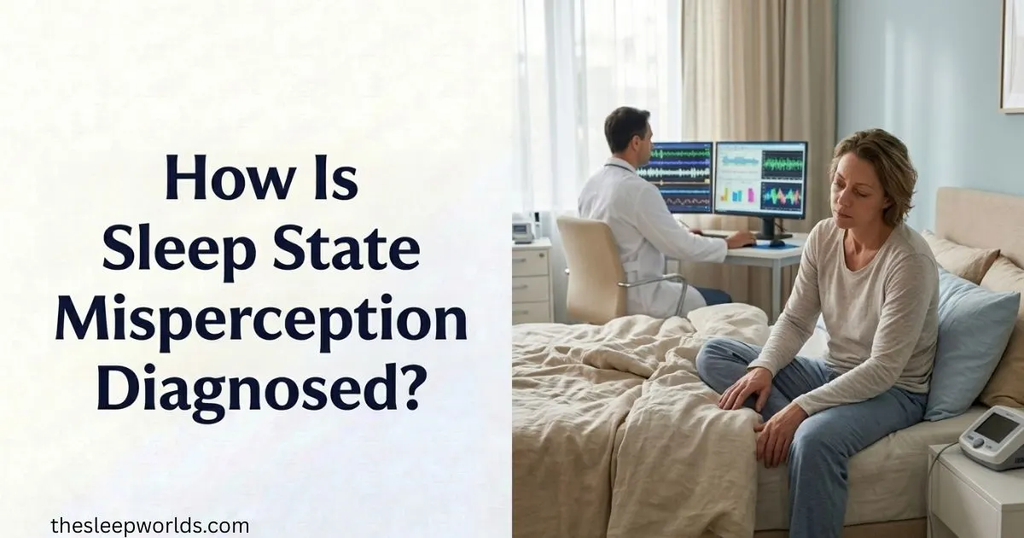
A healthcare professional will generally begin by asking about your sleep schedule, symptoms, medical history, medications, and daytime functioning. A sleep diary may help you record when you go to bed, when you wake up, and how rested you feel. This information can reveal patterns that are difficult to remember accurately.
When necessary, a clinician may recommend actigraphy or a sleep study, depending on the symptoms and suspected condition. These assessments can help investigate sleep duration, sleep patterns, or other disorders. A diagnosis should not be made from an online article or a feeling that you were awake all night.
How to Sleep Better When You Feel Awake All Night
Keep a Consistent Sleep Schedule
Try to wake up at a similar time every day, including weekends when possible. A stable wake time can help regulate your sleep-wake rhythm. Give yourself enough time for sleep based on your age and individual needs, rather than deliberately restricting sleep because you worry that you will not fall asleep.
If you have spent many nights monitoring the clock, consider placing it out of view. Repeatedly checking the time can increase pressure and make bedtime feel like a test. Focus on maintaining a sustainable routine instead of trying to force sleep to happen instantly.
Create a Calm Sleep Environment
Keep your bedroom comfortable, dark, and quiet where practical. Adjust the room temperature, choose bedding that feels comfortable, and reduce unnecessary light or noise. Put electronic devices aside when they keep you engaged or alert, and establish a relaxing wind-down routine before bed.
You might try reading something calming, taking a warm shower, or practicing gentle breathing. These strategies can support relaxation, but they do not guarantee immediate sleep. If you remain awake and frustrated, avoid turning your bedtime routine into another source of pressure.
Reduce Sleep-Related Worry
Instead of repeatedly asking yourself whether you are asleep, try shifting your attention toward relaxing activities and a less judgmental view of rest. Remind yourself that one difficult night does not determine your long-term sleep health. Avoid assuming that every moment of awareness means you have received no sleep.
If worry about sleep becomes persistent, cognitive behavioral therapy for insomnia (CBT-I) may be appropriate. CBT-I is a structured treatment that addresses patterns of thinking and behavior that maintain chronic insomnia. A trained healthcare professional can help determine whether it fits your situation.
Review Your Daily Habits
Notice how caffeine, alcohol, nicotine, naps, exercise, and evening activities affect your sleep. Try to avoid caffeine close to bedtime, and remember that alcohol may disrupt sleep even if it initially makes you feel sleepy. Regular daytime activity and natural light can also support a healthy sleep schedule.
Make changes gradually and track your experience rather than trying to overhaul everything at once. If symptoms persist, investigate them with a clinician instead of relying solely on lifestyle adjustments or taking sleep aids without appropriate guidance.
When Should You See a Healthcare Provider?
Consider speaking with a healthcare professional if you regularly feel unable to sleep, if sleep problems affect your concentration or daily life, or if you experience persistent daytime sleepiness. Repeated episodes of waking unrefreshed may warrant assessment, particularly when accompanied by loud snoring, gasping, or unusual nighttime behaviors.
Seek prompt medical advice if sleep changes occur alongside significant physical or mental health symptoms. A clinician can help distinguish insomnia, sleep state misperception, circadian rhythm problems, and other potential causes. You do not need to prove that you slept poorly before asking for help; describing your experience accurately is a useful starting point.
Conclusion
Feeling like you slept but never truly fell asleep can be unsettling. Sleep state misperception is one possible explanation, but genuine insomnia, stress, an irregular sleep schedule, and other sleep conditions can produce similar experiences.
Start by tracking your sleep patterns, maintaining a consistent routine, and reducing pressure around bedtime. If the problem continues, affects your daily life, or occurs with other concerning symptoms, seek professional assessment. Understanding what is happening is more helpful than assuming you were awake all night or trying to force yourself to sleep.
FAQs
Why does it feel like I am awake even when I sleep?
One possible explanation is sleep state misperception, where perceived sleep differs from actual sleep. Genuine insomnia, stress, and other sleep problems can create similar feelings, so the sensation alone cannot establish the cause.
What is it called when you feel like you did not sleep?
The experience may be described as perceived sleeplessness or sleep state misperception. Paradoxical insomnia is a term used for a particular pattern of underestimating sleep, but not everyone who feels they did not sleep has this condition.
Can your brain think you are awake while you are sleeping?
Some people report feeling awake despite evidence that they slept. Research suggests that sleep perception can differ from measured sleep, but the underlying mechanisms are still being studied.
Why do I wake up tired even after sleeping?
Possible reasons include insufficient sleep, fragmented sleep, an irregular schedule, stress, medication effects, or an underlying sleep or health condition. If tiredness continues or affects daily functioning, discuss it with a healthcare professional.
How can I tell whether I actually slept?
Your subjective experience alone may not reliably establish how long you slept. A sleep diary can help track patterns, while a clinician may recommend actigraphy or a sleep study when appropriate.
Is sleep state misperception dangerous?
The experience can cause distress and concern, but its significance depends on the underlying situation. Persistent sleep difficulties should be assessed, especially if they affect daytime functioning or could reflect another sleep disorder.
What is the best treatment for feeling awake all night?
Treatment depends on the cause. Consistent sleep habits may help, while CBT-I is an established treatment for chronic insomnia. A healthcare professional can recommend the appropriate approach after reviewing your symptoms.
Related reading: Into Deep Sleep | You Want to Sleep | Sleep Deep
Related Articles

Ryan Foster is a curious and dedicated professional with an interest in digital content, lifestyle, and online research. He enjoys exploring useful ideas, learning about new topics, and sharing practical information with others. Ryan values continuous learning, creativity, and building meaningful connections through the digital world.




4 Comments