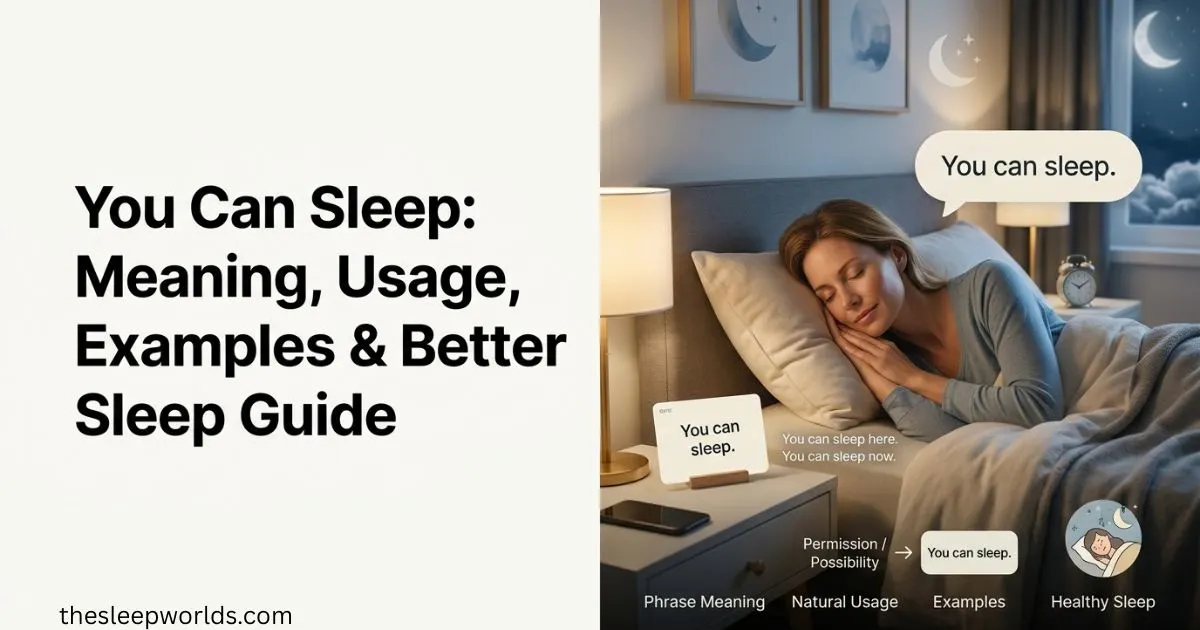
You Can Sleep Meaning, Usage, Examples & Better Sleep Guide
“You can sleep” is a natural English phrase that usually means you are allowed to sleep, you are able to sleep, or you have the opportunity to sleep, depending on context. For example, “You can sleep here tonight” gives permission, while “You can sleep while I drive” tells someone that sleeping is possible during the journey.
The phrase can also connect with everyday sleep questions such as “Can you sleep here?”, “You can sleep now,” or “You can sleep later.” Understanding the difference between can, have to, should, and could makes the meaning much clearer.

What Does “You Can Sleep” Mean?
The meaning of “you can sleep” depends on the situation. Most commonly, it communicates permission or possibility.
For example, if someone says, “You can sleep in my room,” they are giving permission to use the room for sleeping. If someone says, “You can sleep during the flight,” they are explaining that sleeping is possible during the journey.
Is “You Can Sleep” Correct English?
Yes. “You can sleep” is grammatically correct and very common English. The modal verb can is followed by the base form of the verb, so “can sleep” is the correct construction.
The basic structure is:
Subject + can + base verb
Examples include:
- You can sleep.
- You can rest.
- You can stay.
- You can relax.
- You can sleep here.
Oxford’s English dictionary lists sleep as a verb meaning to rest with the eyes closed while the mind and body are less active.
What Does “You Can Sleep” Mean in a Conversation?
In everyday conversation, “you can sleep” can communicate several related ideas.
| Expression | Common meaning |
| You can sleep | You are allowed or able to sleep |
| You can sleep here | You may sleep in this place |
| You can sleep now | It is okay to go to sleep now |
| You can sleep later | You will have an opportunity to sleep later |
| You can sleep while I drive | You may rest while I drive |
| You can sleep in | You don’t need to wake up early |
| You can sleep peacefully | You can rest without worrying |
The surrounding words usually make the intended meaning obvious.
You Can Sleep vs. You Have to Sleep
These two phrases have almost opposite functions.
“You can sleep” usually communicates permission or possibility.
“You have to sleep” communicates necessity or obligation.
For example:
You can sleep now.
This means sleeping is permitted or possible.
You have to sleep now.
This means sleeping is necessary or strongly recommended.
This distinction is particularly useful for English learners because can and have to create very different meanings even though both sentences contain the word “sleep.”
You Can Sleep vs. You Should Sleep
“You can sleep” and “you should sleep” also differ in meaning.
You can sleep = you are permitted or able to sleep.
You should sleep = sleeping is recommended or advisable.
For example, a friend might say, “You can sleep here tonight,” when offering you a place to stay. The same friend might say, “You should sleep early tonight,” when giving advice.
You Can Sleep Here: Meaning
“You can sleep here” normally means you are allowed to sleep here.
It can be used when offering someone a bed, couch, guest room, hotel room, or another suitable sleeping place.
Examples:
- “You can sleep here tonight.”
- “You can sleep in the guest room.”
- “You can sleep on the couch.”
- “You can sleep here if you want.”
The phrase is particularly common when someone is offering accommodation or reassurance.
You Can Sleep Now: Meaning
“You can sleep now” usually means that the person is free or permitted to go to sleep.
For example, a parent might say this after finishing a bedtime routine. Someone traveling might say it after taking responsibility for driving.
The expression can also sound reassuring:
“Don’t worry about anything. You can sleep now.”
Here, the speaker is communicating that the listener can relax rather than remain awake.
You Can Sleep While I Drive
“You can sleep while I drive” is a natural sentence used when one person is driving and another passenger is tired.
For example:
“It’s a long trip, so you can sleep while I drive.”
The phrase establishes two simultaneous activities: one person drives and the other rests. Similar constructions such as “you can sleep while I’m driving” are also natural.

You Can Sleep Until We Arrive
Another common structure is:
“You can sleep until we arrive.”
This means the listener is permitted to remain asleep throughout the journey until the destination is reached.
The construction “can + sleep + until” is useful when describing permission to sleep for a particular period. For example:
- You can sleep until we get there.
- You can sleep until the alarm rings.
- You can sleep until morning.
- You can sleep until we reach the hotel.
English-learning examples also use this structure to express the idea of letting someone sleep during a journey.
You Can Sleep In: Meaning
“You can sleep in” has a different meaning from simply “you can sleep.”
To sleep in generally means to sleep later than usual, especially because you do not need to wake up early.
For example:
“It’s Saturday, so you can sleep in tomorrow.”
This means the person can stay in bed and wake later than normal.
You Can Sleep Anywhere
“You can sleep anywhere” means that someone is able to fall asleep or rest in many different places.
For example:
“He’s always tired. He can sleep anywhere.”
This may describe someone who falls asleep easily, although it can also be used humorously.
Being able to fall asleep in unusual situations is different from having healthy sleep. Sleep quality, regularity, and sufficient duration are important considerations.
You Can Sleep Better
When “you can sleep better” is used, can expresses possibility or potential.
For example:
“With a consistent bedtime routine, you can sleep better.”
This does not guarantee that someone will sleep perfectly. It means that a particular change may help create better conditions for sleep.
Good sleep habits can include maintaining a regular schedule, creating a comfortable bedroom, limiting stimulating activities before bed, and allowing enough time for sleep.
Can You Sleep?
The question “Can you sleep?” can have several meanings depending on context.
It might mean:
- Are you able to sleep?
- Can you fall asleep normally?
- Are you permitted to sleep?
- Is it possible for you to sleep in this situation?
For example:
“Can you sleep on airplanes?”
asks whether someone is capable of sleeping during flights.
By contrast:
“Can you sleep here tonight?”
may ask whether the person is able or willing to stay and sleep there.
Can You Sleep Well?
“Can you sleep well?” asks whether someone is generally able to get restful, good-quality sleep.
A person might answer:
- “Yes, I sleep well.”
- “Not really.”
- “I have trouble falling asleep.”
- “I wake up several times.”
- “I sleep well when my schedule is consistent.”
Sleep problems are not always simply a matter of choosing to sleep. Persistent difficulty falling asleep or staying asleep can have many possible causes.
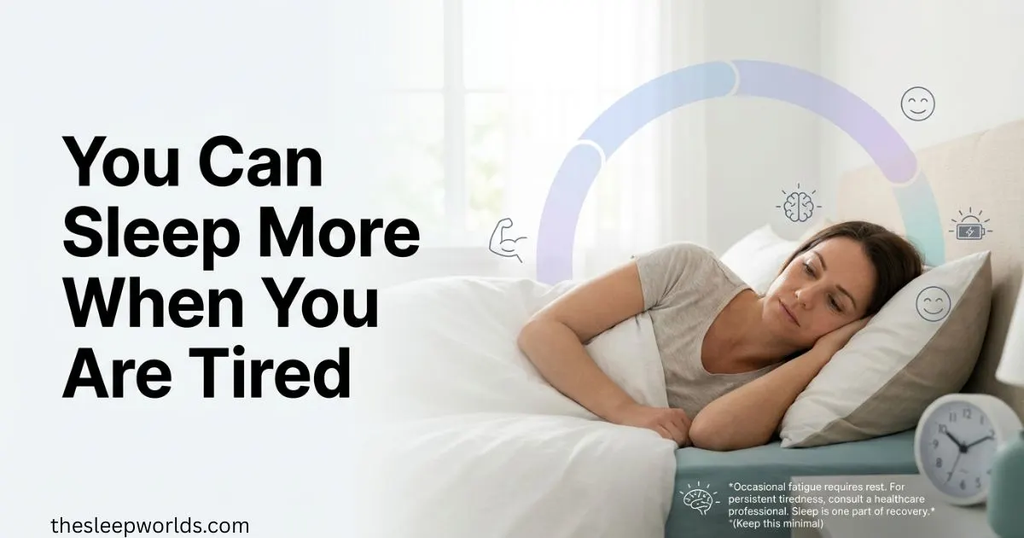
You Can Sleep More When You Are Tired
Feeling tired naturally increases the desire to sleep. Sleep is a fundamental biological process, and the body regulates sleep through interacting systems that influence sleepiness and wakefulness.
However, sleeping more is not always the complete solution to persistent daytime tiredness. If someone regularly gets adequate time in bed but remains excessively sleepy or unrefreshed, the underlying cause may need further evaluation.
How to Create Better Conditions So You Can Sleep
If the search intent behind “you can sleep” is actually “how can I sleep?”, practical sleep habits can help.
Try to:
- Keep a consistent wake-up time.
- Give yourself enough time for sleep.
- Get daylight exposure during the day.
- Exercise regularly.
- Avoid excessive caffeine late in the day.
- Keep your bedroom comfortable and quiet.
- Develop a relaxing pre-bed routine.
- Avoid turning bedtime into a stressful test of whether you can fall asleep.
The goal is not to force sleep but to create an environment and routine that support natural sleep.
What If You Can Sleep but Still Feel Tired?
Being able to sleep does not necessarily mean that your sleep is sufficiently restorative.
Someone can spend enough time in bed but experience frequent awakenings, an irregular sleep schedule, or another problem that reduces sleep quality. Persistent daytime sleepiness, loud snoring, breathing pauses, gasping during sleep, or repeated nighttime awakenings may warrant discussion with a healthcare professional.
You Can Sleep: Common Examples
Here are natural examples using the phrase:
- You can sleep here tonight.
- You can sleep on the couch.
- You can sleep while I drive.
- You can sleep until we arrive.
- You can sleep now; everything is ready.
- You can sleep later if you want.
- You can sleep in tomorrow.
- You can sleep peacefully knowing you’re safe.
- You can sleep in the guest room.
- You can sleep here whenever you visit.
Each sentence uses can to communicate permission, possibility, or an available opportunity.
Conclusion
“You can sleep” is a simple but flexible English phrase. Its exact meaning depends on context: it can express permission, possibility, ability, or an available opportunity to sleep. “You can sleep here,” “you can sleep now,” and “you can sleep while I drive” all use the same basic structure but communicate slightly different ideas.
For English learners, the key distinction is between can, should, and have to. For sleep-related searches, the phrase can also lead into practical questions about sleep quality, falling asleep, sleeping longer, and creating healthier sleep conditions.
FAQs
What does “you can sleep” mean?
“You can sleep” generally means you are allowed to sleep or you are able to sleep, depending on the context.
Is “you can sleep” grammatically correct?
Yes. It is a grammatically correct and natural English sentence. The modal verb can is followed by the base verb sleep.
What does “you can sleep here” mean?
“You can sleep here” usually means you are permitted to sleep in this location. It is commonly used when offering someone a place to stay.
What does “you can sleep now” mean?
It generally means you are free or permitted to go to sleep now.
What does “you can sleep while I drive” mean?
It means the listener can rest or sleep while another person takes responsibility for driving.
What is the difference between “you can sleep” and “you have to sleep”?
“You can sleep” communicates permission or possibility, whereas “you have to sleep” communicates necessity or obligation.
What is the difference between “you can sleep” and “you should sleep”?
“You can sleep” generally means sleeping is possible or permitted. “You should sleep” means the speaker recommends sleeping.
What does “you can sleep in” mean?
“You can sleep in” means you can remain asleep or stay in bed later than your normal waking time.
Is “can you sleep?” correct English?
Yes. “Can you sleep?” is a correct question. Depending on context, it can ask whether someone is capable of sleeping or whether sleeping is possible or permitted.
Can “you can sleep” mean permission?
Yes. Permission is one of its most common meanings. For example, “You can sleep in the guest room” means the speaker permits the listener to sleep there.
Related Articles

Ryan Foster is a curious and dedicated professional with an interest in digital content, lifestyle, and online research. He enjoys exploring useful ideas, learning about new topics, and sharing practical information with others. Ryan values continuous learning, creativity, and building meaningful connections through the digital world.