

Sleep Dream How Sleep and Dreams Work, Meaning & Science
Sleep and dreams are closely connected, but dreaming is not limited to one particular stage of sleep. Dreams can occur during both REM and non-REM sleep, although the most vivid and memorable dreams are generally associated with REM sleep. Scientists understand many aspects of sleep dreaming, but the exact reason humans dream remains uncertain.
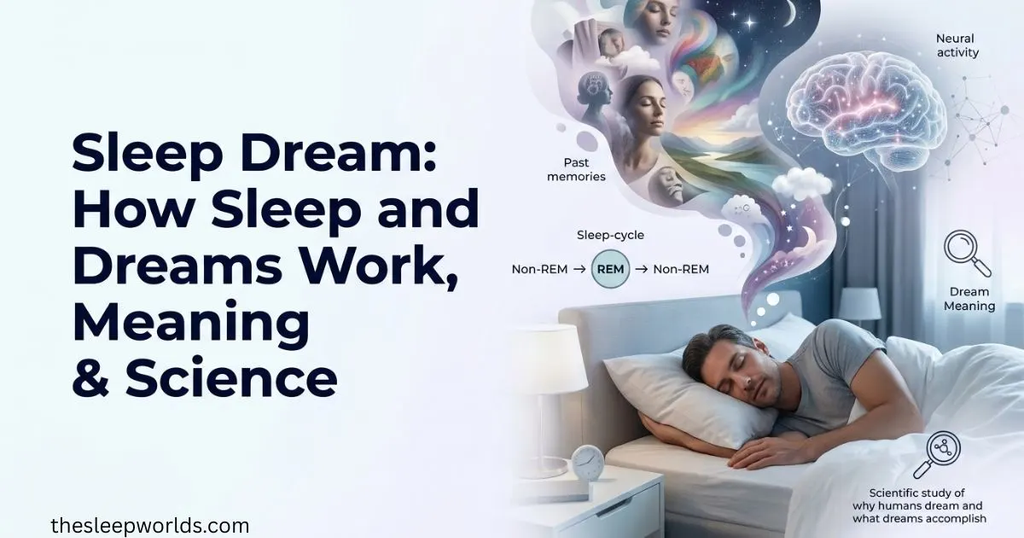
During a normal night, the brain moves repeatedly through different sleep stages. These cycles include non-REM sleep and REM sleep, with deep sleep tending to be more prominent earlier in the night and REM periods becoming longer toward morning.
Sleep Dream: What Is a Dream?
A dream is a mental, emotional, or sensory experience that occurs while a person is asleep. Dreams can involve images, sounds, conversations, emotions, memories, people, places, and unusual combinations of events.
Dream experiences vary considerably. Some dreams may feel realistic and familiar, while others can be highly imaginative or confusing. Dream recall also varies, which means a person can dream without remembering the experience after waking.
Sleep Dream: When Do Dreams Happen?
Dreaming can occur throughout sleep, including during NREM stages. However, dreams are generally more vivid, complex, and emotionally intense during REM sleep.
REM periods become longer as the night progresses. This is one reason people may remember particularly detailed dreams after waking in the early morning.
Sleep Dream During REM Sleep
REM stands for rapid eye movement. During this stage, brain activity becomes relatively active, the eyes move rapidly, and most major muscles become temporarily relaxed or inhibited.
REM sleep is strongly associated with vivid dreaming, although REM sleep and dreaming are not exactly the same thing. Dreaming can occur without REM sleep, and REM sleep does not mean that a person will necessarily remember a dream.
Sleep Dream During NREM Sleep
NREM sleep includes three stages, progressing from lighter sleep to deep sleep. People can experience dreams during NREM sleep as well.
NREM dreams may be less vivid or more thought-like than typical REM dreams, although individual experiences differ. Research has shown that dreaming is not exclusively a REM phenomenon.
Sleep Dream: Why Do We Dream?
There is no single scientifically established explanation for why humans dream.
Researchers have proposed several possibilities involving memory processing, emotional processing, learning, brain activity, and the integration of information. However, scientists still do not completely understand the purpose or function of dreaming.
This means that claims suggesting every dream has one fixed psychological or symbolic meaning should be treated cautiously.
Sleep Dream and Memory
Sleep plays an important role in learning and memory, and REM sleep is involved in brain processes related to learning and memory. Dreaming may occur alongside some of these processes, although the exact relationship between dream experiences and memory formation is still being studied.
A dream may incorporate fragments of recent experiences, older memories, emotions, or familiar people. That does not necessarily mean the dream provides a literal message about those experiences.
Sleep Dream and Emotions
Dreams can contain strong emotions such as happiness, fear, sadness, excitement, embarrassment, or anxiety.
NIH materials note that dreaming may help with emotional processing, while stress and anxiety can be associated with frightening dreams. However, having a particular dream does not automatically prove that a person has a specific emotional or psychological problem.
Sleep Dream: Why Are Some Dreams So Real?
Some dreams feel extremely realistic because several brain systems remain highly active during sleep, particularly during REM sleep.
Dreams can combine visual imagery, sounds, emotions, movement, memories, and imagined situations into a convincing experience. Because the brain is generating the experience internally, the dream can feel real while it is happening.
The unusual logic of dreams may only become obvious after waking.

Sleep Dream: Why Do We Forget Dreams?
Many people remember only a small portion of their dreams, and some believe they never dream because they rarely remember them.
Dream recall is influenced by when you wake up and how quickly the dream memory fades. Dreams experienced immediately before awakening may be easier to remember than dreams occurring earlier in the night.
Keeping a dream journal beside the bed and writing down details immediately after waking can improve dream recall.
Sleep Dream: Why Do We Have Nightmares?
A nightmare is a disturbing or frightening dream that can cause strong negative emotions and may wake the sleeper.
Occasional nightmares are common. Stress, anxiety, traumatic experiences, medications, sleep disruption, and other factors can influence nightmare frequency.
Frequent nightmares that repeatedly disturb sleep or cause significant daytime distress may deserve professional evaluation.
Sleep Dream vs Night Terror
Dreams and night terrors are not the same phenomenon.
Night terrors generally occur during NREM sleep and can involve intense fear, crying, screaming, rapid movement, or apparent confusion. The person may have little or no memory of the episode afterward.
Nightmares, by contrast, are typically remembered as frightening dreams and commonly occur during REM sleep.
Sleep Dream and Sleep Quality
Dreaming itself is not necessarily a sign of poor sleep. Dreaming is a normal part of sleep, and healthy sleep includes repeated cycles of NREM and REM sleep.
However, frequent nightmares or dreams that repeatedly wake you can interfere with sleep continuity. If you consistently wake feeling unrefreshed or experience significant nighttime disruption, the underlying sleep problem may be more important than the dreams themselves.
Sleep Dream: How Long Do Dreams Last?
People experience multiple periods of dreaming during a typical night. Dream periods can vary in length, and REM periods generally become longer later in the night.
Some dream experiences may seem extremely long because the brain can create a complex sequence of events, but the subjective experience of dream time does not necessarily correspond perfectly to clock time.
Sleep Dream: Do Dreams Have Meanings?
Dreams can feel meaningful, but science does not support one universal dictionary in which a particular dream symbol always has one specific meaning.
For example, dreaming about water does not automatically have one scientifically established interpretation for everyone. Personal experiences, memories, emotions, culture, and circumstances can influence dream content.
Dream interpretation can therefore be explored as a personal or cultural practice, but it should not be presented as a scientifically proven method for diagnosing a person’s mental or physical condition.
Sleep Dream: Can You Control Your Dreams?
Some people experience lucid dreams, in which they become aware that they are dreaming while the dream is occurring. Some lucid dreamers report being able to influence aspects of the dream.
Lucid dreaming is a recognized sleep phenomenon, but the ability to control dreams varies between people. Techniques intended to induce lucid dreams can also affect sleep patterns, so maintaining healthy sleep should remain the priority.
Sleep Dream: How to Remember Dreams Better
If you want to remember more of your dreams, several simple strategies may help:
- Keep a notebook or phone nearby.
- Record the dream immediately after waking.
- Avoid moving around too much before recalling the dream.
- Write down emotions, people, locations, and major events.
- Give yourself a few quiet moments before starting your morning routine.
- Maintain a regular sleep schedule.
Dream recall can improve with practice because paying attention to dreams makes you more likely to preserve their details.
Sleep Dream: How to Support Healthy Sleep
Healthy sleep provides the foundation for normal sleep cycles and dreaming.
Useful habits include maintaining a consistent sleep schedule, keeping the bedroom comfortable and dark, getting regular physical activity, managing evening light exposure, and avoiding habits that interfere with sleep.
Because REM sleep becomes more prominent later in the night, regularly cutting sleep short may also reduce the later sleep periods in which vivid dreams are more common.

Sleep Dream and Sleep Deprivation
Sleep deprivation affects the brain’s ability to maintain normal sleep architecture and can interfere with learning, memory, attention, and daily performance.
When sleep is repeatedly shortened or disrupted, the issue is not simply whether you remember your dreams. Adequate total sleep and healthy sleep continuity are more important for overall health than trying to achieve a particular amount of dreaming.
When Should You Talk to a Doctor About Dreams?
Dreaming is normally a healthy part of sleep. However, professional advice may be appropriate if dreams or nighttime behaviors regularly interfere with sleep or daytime life.
Consider seeking medical advice if you experience frequent distressing nightmares, repeated sleep disruption, unusual movements during dreams, severe daytime sleepiness, or other persistent sleep problems.
The goal is to identify whether an underlying sleep disorder, medication effect, stress-related issue, or another factor is contributing to the problem.
Conclusion
Sleep and dreams are an important part of normal human sleep, but dreaming is more complex than the common idea that dreams happen only during REM sleep. Dreams can occur during both REM and NREM sleep, with the most vivid and memorable experiences generally occurring during REM.
Scientists continue to investigate why we dream and how dreaming relates to memory, emotions, learning, and brain activity. While individual dreams can feel meaningful, there is no universally proven interpretation for every dream symbol. The most important priority is maintaining sufficient, regular, and restorative sleep.
FAQs
What is a sleep dream?
A sleep dream is a mental experience that occurs while sleeping and may include images, sounds, emotions, memories, people, or imagined situations.
Do you only dream during REM sleep?
No. Dreams can occur during NREM sleep as well as REM sleep. However, vivid and complex dreams are generally more common during REM.
Why do we dream?
Scientists do not yet know the exact purpose of dreaming. Research suggests possible connections with memory, learning, and emotional processing, but no single explanation has been confirmed.
Why do I forget my dreams?
Dream memories can fade quickly after waking. You are more likely to remember a dream if you wake during or shortly after it and focus on recalling its details.
Are dreams real?
Dreams can feel extremely real while they are happening, but they are internally generated experiences produced by the sleeping brain.
Do dreams have meanings?
A dream may have personal significance, but there is no scientifically established universal meaning for every dream symbol.
Are nightmares normal?
Occasional nightmares are common. Frequent nightmares that disrupt sleep or cause significant distress may require further evaluation.
Can you dream during deep sleep?
Dreaming can occur during NREM sleep, including stages outside REM. However, dream experiences are generally more vivid during REM sleep.
How can I remember my dreams?
Keep a dream journal nearby and write down whatever you remember immediately after waking. Recording even small details can improve dream recall over time.
Related Articles

Ryan Foster is a curious and dedicated professional with an interest in digital content, lifestyle, and online research. He enjoys exploring useful ideas, learning about new topics, and sharing practical information with others. Ryan values continuous learning, creativity, and building meaningful connections through the digital world.






3 Comments