
Sleep and Dream How Sleep Works, Why We Dream & What Dreams Mean
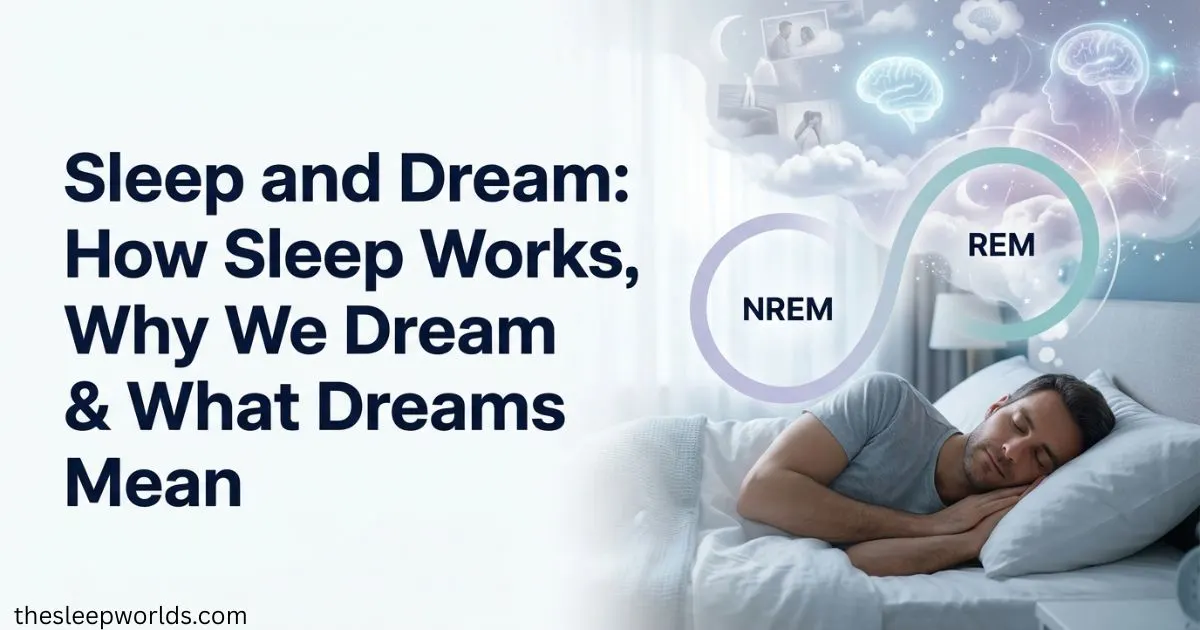
Sleep and dream are closely connected parts of the human sleep experience, but dreaming is not limited to a single sleep stage. Dreams can occur during both REM and non-REM sleep, although the most vivid and complex dreams are usually associated with REM sleep. Scientists still do not have one definitive explanation for why humans dream.
During a normal night, the brain repeatedly cycles through non-REM and REM sleep. These stages support different aspects of physical restoration, memory, learning, and brain function. Understanding the relationship between sleep and dreams can help explain why dreams become more vivid toward morning, why some dreams are remembered while others disappear quickly, and how nightmares can affect sleep quality.
What Are Sleep and Dreams?
Sleep is an active biological process rather than simply a period when the body shuts down. During sleep, the brain moves through predictable stages of non-REM and REM sleep several times throughout the night. A complete sleep cycle generally repeats about every 80 to 100 minutes.
A dream is a mental, emotional, or sensory experience that occurs while sleeping. Dreams may involve images, sounds, people, memories, emotions, places, or unusual combinations of experiences. Although dreaming is most strongly associated with REM sleep, it can also happen during non-REM sleep.
How Does Sleep Affect Dreaming?
Sleep architecture influences when and how vividly people dream. Early in the night, people generally experience more deep NREM sleep. As the night progresses, REM periods become longer, which is one reason dreams are often particularly vivid during the later part of sleep.
This pattern also explains why someone who wakes naturally in the morning may remember a detailed dream. The final part of the night contains relatively more REM sleep than the beginning.
The Four Main Sleep Stages
Modern sleep descriptions divide sleep into three NREM stages and one REM stage:
| Sleep Stage | What Happens | Relationship to Dreams |
| N1 | Transition from wakefulness to sleep | Dream-like experiences can occur |
| N2 | Light sleep with slower brain activity | Dreams can occur |
| N3 | Deep or slow-wave sleep | Dreaming can occur but is generally less vivid |
| REM | Active brain state with rapid eye movements | Most vivid dreaming occurs |
The body cycles through these stages repeatedly during a normal night’s sleep.
Why Do We Dream?
Scientists do not yet know exactly why humans dream. Several theories connect dreaming with memory processing, emotional experiences, learning, and brain activity during sleep, but no single explanation has been conclusively established.
Dreams can incorporate recent experiences, emotions, memories, and seemingly unrelated details. Their unusual or fragmented nature may reflect the changing pattern of brain activity during sleep.
Do Dreams Have a Meaning?
Dreams can feel meaningful, but science does not provide a universal dictionary in which a particular dream symbol always has one specific meaning.
For example, dreaming about falling, flying, an old friend, water, or being chased does not automatically indicate one particular psychological condition or future event.
The personal context surrounding a dream matters, and researchers continue to investigate how dreaming relates to memory and emotional processing.
When Do We Dream?
Dreaming can happen during different stages of sleep, but REM sleep is the stage most strongly associated with vivid dreaming. During REM, brain activity becomes more similar to waking activity, while most major muscles temporarily become inactive.
REM periods become longer as the night progresses. This means dreams near morning can sometimes feel longer, more detailed, emotional, or bizarre than dreams experienced earlier in the night.
Do You Dream Every Night?
Research suggests that everyone dreams, even though people do not remember every dream. NIH notes that people may spend around two hours per night dreaming, while Sleep Foundation similarly describes multiple dreams occurring throughout a normal night.
Not remembering a dream does not necessarily mean you did not dream. Dream memories can disappear rapidly if you wake and immediately shift your attention to other activities.
Why Do We Forget Dreams?
Dream recall is strongly influenced by when and how you wake up. If you wake directly from a vivid REM dream, you may remember substantial details. If you transition from dreaming into another sleep stage before waking, the dream may be much harder to recall.
Other factors can influence dream memory, including sleep interruptions, attention, stress, and whether you intentionally try to remember your dreams.
How Can You Remember Your Dreams?
If you want to improve dream recall:
- Keep a notebook beside your bed.
- Write down dreams immediately after waking.
- Avoid reaching for your phone immediately.
- Record even small details.
- Note emotions, locations, people, and unusual events.
- Try to wake naturally when possible.
Dream journaling does not prove that dreams have a hidden meaning, but it can help you preserve details that would otherwise disappear.
What Is REM Sleep and Why Is It Important?
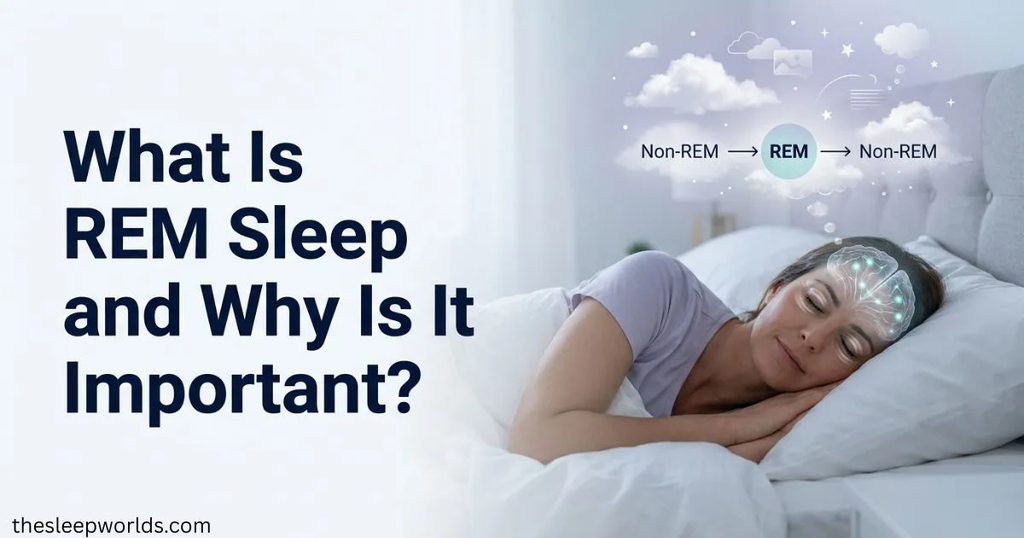
REM stands for rapid eye movement. During REM sleep, brain activity becomes relatively active, breathing and heart rate can become more variable, and most skeletal muscles become temporarily inhibited.
REM sleep is associated with dreaming, learning, memory, and emotional processing. However, REM is only one component of healthy sleep; adequate NREM sleep is also essential.
REM Sleep and Memory
Sleep as a whole contributes to learning and memory. Research suggests that different sleep stages may participate in different aspects of memory processing, including the stabilization and integration of information.
This is why reducing total sleep simply to avoid dreaming is not a healthy strategy. The brain needs a complete sleep architecture rather than maximizing or eliminating one specific stage.
What Is Deep Sleep?
Deep sleep is NREM Stage 3, also called slow-wave sleep. It is generally more prominent during the first part of the night. During this stage, breathing and heart rate slow and the body enters a highly restorative state.
People sometimes assume that deep sleep and dreaming are opposites. However, dreaming can occur during NREM sleep too. The main difference is that REM dreams tend to be more vivid and elaborate.
Can You Dream During Deep Sleep?
Yes. Dreaming is not exclusive to REM sleep.
Research has found that people can report dream experiences after being awakened from NREM sleep. However, dreams during NREM sleep are often less vivid or more thought-like than the complex imagery commonly reported from REM sleep.
Therefore, saying that “you only dream during REM” is an oversimplification.
Why Are Some Dreams So Vivid?
Vivid dreams are particularly common during REM sleep because brain activity increases during this stage and becomes more similar to waking activity.
REM dreams can contain intense emotions, unusual imagery, rapidly changing locations, familiar people, and seemingly impossible events. Their intensity does not necessarily mean that something is wrong with your sleep.
What Causes Nightmares?
Nightmares are unpleasant or frightening dreams that can cause distress or wake a person from sleep. Occasional nightmares are common, but frequent nightmares can interfere with sleep quality and contribute to next-day tiredness or stress.
Stress, emotional experiences, sleep disruption, medications, and other factors can contribute to nightmares. The specific cause varies from person to person.
When Are Nightmares a Problem?
Occasional bad dreams generally do not indicate a serious problem.
However, frequent nightmares may deserve attention if they:
- Regularly wake you up
- Make you afraid to sleep
- Cause significant daytime fatigue
- Increase anxiety around bedtime
- Interfere with work, school, or relationships
- Occur alongside other persistent sleep problems
If nightmares are frequent or significantly disrupt your life, discussing them with a healthcare professional can help identify possible causes and treatment options.
Does Stress Affect Sleep and Dreams?
Yes. Stress can influence both sleep quality and dream experiences. NIH notes that people experiencing stress or anxiety are more likely to have frightening dreams.
Stress can also make it harder to fall asleep or remain asleep. This can create a cycle in which poor sleep increases daytime stress while stress makes the next night’s sleep more difficult.
A consistent bedtime routine, relaxation techniques, regular exercise, and addressing the underlying source of stress may support better sleep.
Can Poor Sleep Affect Dreams?
Poor sleep and dreams can influence each other. Sleep disruption may contribute to more unpleasant dreams, while nightmares can cause awakenings and further fragment sleep.
This means that improving general sleep habits may also help create a more stable dreaming experience.
How to Improve Sleep and Dream Quality
You cannot completely control what you dream, but you can improve the conditions in which sleep and dreaming occur.
Maintain a Consistent Sleep Schedule
Going to bed and waking up at approximately the same time each day can support your circadian rhythm and make your sleep pattern more predictable.
Get Enough Total Sleep
Adults generally need at least seven hours of sleep per night, although individual needs vary. Getting enough sleep allows the brain to complete multiple NREM and REM cycles.
Cutting sleep short can reduce the amount of time available for later-night REM periods, when dreams tend to become longer and more vivid.
Create a Comfortable Bedroom
A cool, dark, quiet, and comfortable bedroom can support more consistent sleep.
Reduce unnecessary noise, bright light, uncomfortable temperatures, and electronic distractions.
Manage Evening Stimulation
A relaxing pre-bed routine can help the transition from wakefulness to sleep.
Reading, gentle stretching, quiet music, breathing exercises, or another calming activity can become part of a regular wind-down period.
Be Careful With Caffeine and Alcohol
Caffeine can interfere with sleep, especially when consumed late in the day. Alcohol may make some people sleepy initially but can disrupt normal sleep architecture and sleep continuity.
If your dreams become more disturbing after changes in caffeine, alcohol, medications, or sleep schedule, discuss persistent concerns with a healthcare professional.
Can You Control Your Dreams?
Some people experience lucid dreams, in which they become aware that they are dreaming while the dream is still happening. Some lucid dreamers report being able to influence elements of the dream.
Lucid dreaming is a real sleep phenomenon, but the ability to control dreams varies substantially between individuals.
It should not be confused with ordinary dream recall. Remembering a dream after waking does not mean that you were lucid during the dream.
What Is a Recurring Dream?
A recurring dream is a dream pattern or theme that appears repeatedly.
Recurring dreams may involve similar locations, people, situations, emotions, or conflicts. There is no scientifically established universal interpretation for recurring dream symbols.
If recurring dreams are pleasant or neutral, they are not necessarily a problem. If they are frightening and repeatedly disrupt sleep, addressing stress and discussing persistent nightmares with a healthcare professional may be appropriate.
Sleep and Dream: The Connection With Memory
Sleep plays an important role in memory and learning, while dreaming appears to occur within the broader processes taking place during sleep. Research continues to examine how REM and NREM sleep contribute to memory consolidation and emotional processing.
Dream content may sometimes include fragments of recent experiences, but a dream should not automatically be interpreted as a literal replay of a memory.
Is Dreaming a Sign of Good Sleep?
Dreaming by itself does not prove that you had good or bad sleep.
People can dream during both healthy and disrupted sleep. A vivid dream may simply mean that you woke close to a dream period, making the experience easier to remember.
Overall sleep duration, continuity, daytime alertness, and how rested you feel provide more useful information about sleep quality than dream frequency alone.

When Should You Talk to a Doctor About Sleep and Dreams?
Consider professional evaluation if you regularly experience:
- Severe or frequent nightmares
- Persistent insomnia
- Excessive daytime sleepiness
- Loud snoring
- Gasping or choking during sleep
- Repeated nighttime awakenings
- Acting out dreams
- Significant changes in sleep patterns
- Sleep problems that interfere with daily life
Dreams themselves are usually a normal part of sleep, but persistent sleep disruption or unusual behaviors during sleep may require further evaluation.
Conclusion
Sleep and dream are deeply connected, but dreaming is more complex than simply being a feature of REM sleep. Dreams can occur throughout sleep, although the most vivid and elaborate dreams generally occur during REM periods. During a normal night, the brain cycles repeatedly through NREM and REM sleep, giving the body and brain opportunities for restoration, learning, memory processing, and other important functions.
Scientists still do not know exactly why we dream or whether every dream has a specific meaning. What is clear is that dreaming is a normal part of sleep, while frequent nightmares or persistent sleep disruption can affect sleep quality. Maintaining a consistent sleep schedule, getting enough total sleep, creating a comfortable bedroom, and managing stress can support healthier sleep and more stable nighttime experiences.
Ultimately, the goal should not be to eliminate dreams or force a particular type of dream. The priority is healthy, sufficient and restorative sleep, with dreams understood as one fascinating part of the sleeping brain.
FAQs
What is the connection between sleep and dreams?
Dreams occur during sleep and are most vivid during REM sleep, although dreaming can also occur during NREM sleep.
Do you dream every night?
Most people experience multiple dreams during a normal night, but they may not remember them after waking.
Which stage of sleep has the most dreams?
Dreaming can occur in all sleep stages, but the most vivid and complex dreams are generally associated with REM sleep.
Can you dream during deep sleep?
Yes. Dreaming can occur during NREM sleep, including deep sleep, although dream experiences during NREM are often less vivid than typical REM dreams.
Why do I forget my dreams?
Dream memories can disappear quickly after waking. Whether you wake directly from a dream and how quickly you shift your attention can affect dream recall.
Why are my dreams so vivid?
Vivid dreams are particularly common during REM sleep, when brain activity becomes more similar to waking activity.
Do dreams have meanings?
There is no scientifically established universal meaning for specific dream symbols. Dream interpretation is highly personal, and scientists are still investigating why dreaming occurs.
Does stress cause bad dreams?
Stress and anxiety can be associated with frightening dreams and nightmares.
Are nightmares bad for sleep?
Frequent nightmares can disrupt sleep by causing awakenings and may contribute to next-day tiredness or stress.
How can I remember my dreams?
Writing down your dreams immediately after waking, keeping a journal near your bed, and avoiding distractions immediately after waking may improve dream recall.
Can you control your dreams?
Some people experience lucid dreams, during which they recognize that they are dreaming and may be able to influence aspects of the dream. The ability varies from person to person.
Is dreaming a sign that I am sleeping well?
Not necessarily. Dreaming is normal, but dream frequency or vividness alone cannot determine whether sleep is healthy. Overall sleep duration, continuity, and daytime functioning are more useful indicators.
Related Articles

Ryan Foster is a curious and dedicated professional with an interest in digital content, lifestyle, and online research. He enjoys exploring useful ideas, learning about new topics, and sharing practical information with others. Ryan values continuous learning, creativity, and building meaningful connections through the digital world.





3 Comments