

Sleep in Sleep: A Journey Inside the Sleeping Brain
Close your eyes and the world goes quiet. But inside your skull, the night shift is just beginning. Sleep in sleep is not emptiness; it is a hidden world of electrical storms, chemical washes, and vivid stories your brain tells itself.
To understand sleep in sleep is to take a journey inside the sleeping brain: what fires, what rests, what gets cleaned, and what gets dreamed, hour by hour until dawn.
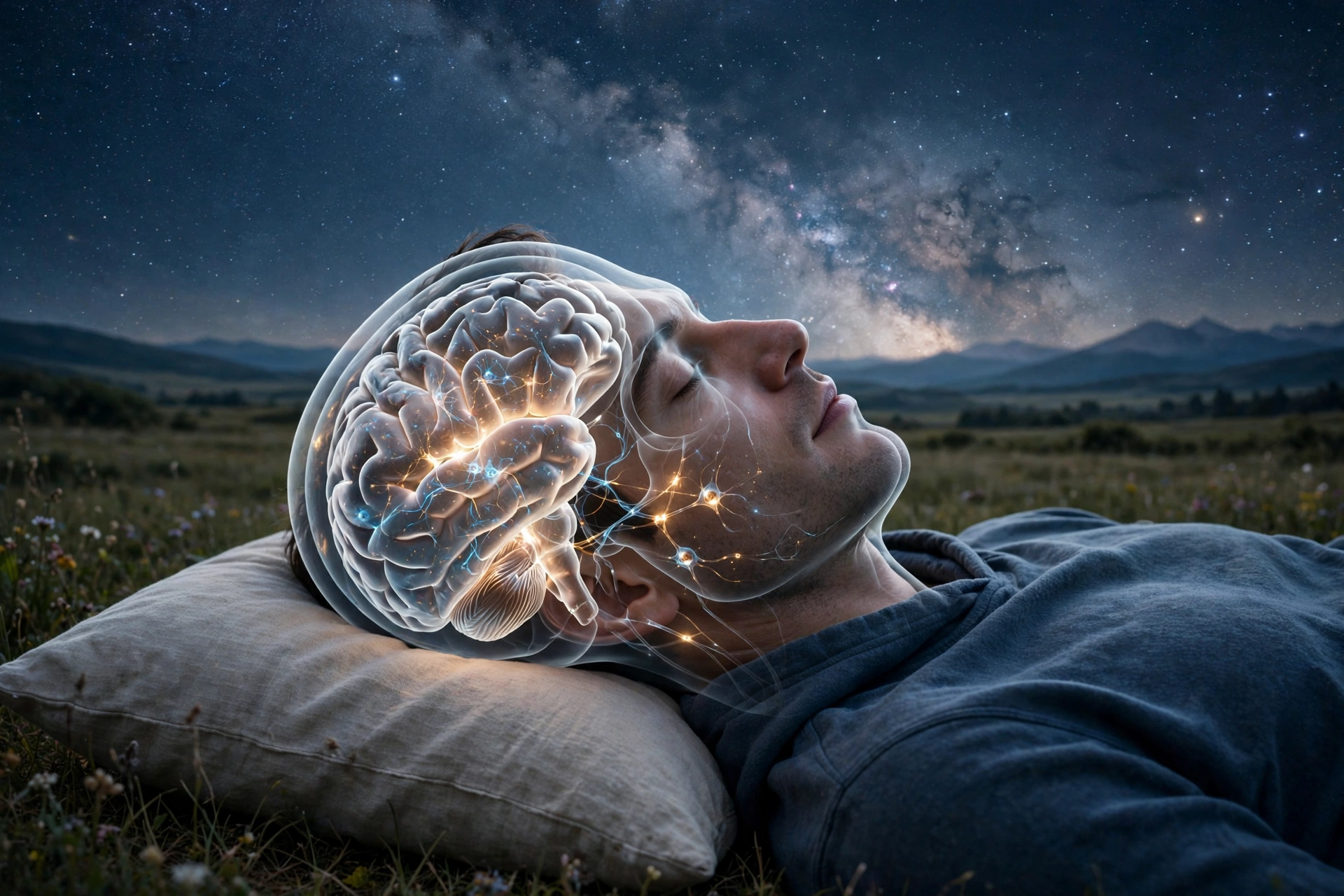
Sleep in Sleep: The Brain Never Clocks Out
A common myth says the brain “shuts down” during sleep. Brain scans show the opposite: different regions simply change their pattern of activity. Some areas go quiet while others become more active than during the day.
Sleep in sleep is better described as the brain switching jobs: from processing the outside world to maintaining the inside one.
Sleep in Sleep: The First Hour
As you drift off, the thalamus, the brain’s sensory gatekeeper, begins blocking outside signals. That is why the room seems to fade even though your ears still work.
Brain waves slow from the busy beta of waking into the relaxed alpha and then theta of light sleep. Muscles loosen, breathing evens out, and the descent begins.
Sleep in Sleep: Deep in the Night Brain
Slow Waves Roll Through
In deep NREM sleep, huge slow waves sweep across the cortex in synchrony. Millions of neurons fire together, then rest together: the deepest rest the brain knows.
The Cleaning Crew Arrives
Cerebrospinal fluid pulses through the brain in waves, washing away metabolic waste built up during the day. This glymphatic cleaning is most powerful in deep sleep and may protect long-term brain health.
Memories Get Filed
The hippocampus replays the day’s experiences to the cortex, like transferring files from a USB stick to a hard drive. This replay is why sleep after learning cements knowledge.

Sleep in Sleep: The Dreaming Brain
During REM sleep, the brainstem sends random signals upward, and the cortex weaves them into stories: dreams. The visual cortex lights up, the emotional centers run hot, and the prefrontal logic center stays dim, which is why dreams feel vivid but make no sense.
Meanwhile, the brain paralyzes the body’s major muscles. You can run, fly, or fight in a dream without moving a muscle: a safety lock called REM atonia.
Sleep in Sleep: Hour-by-Hour Timeline
| Time asleep | Brain state | What is happening |
|---|---|---|
| 0-30 min | Light NREM | Sensory gates close; descent begins |
| 30-90 min | Deep NREM | Slow waves; cleaning and repair peak |
| 90-120 min | First REM | Short dreaming period begins |
| Mid-night | Cycling | Deep and REM alternate in 90-min loops |
| Final hours | REM-heavy | Long dreams; emotional processing peaks |
Sleep in Sleep: Chemicals of the Night
- Melatonin: rises with darkness, signals that night has come
- Adenosine: builds all day creating sleep pressure; clears during sleep
- Growth hormone: surges in deep sleep for tissue repair
- Cortisol: falls at night, then rises before waking to rouse you
This chemical choreography is why timing matters: go to bed at a wildly different hour and the whole orchestra plays out of sync.
Sleep in Sleep: Why You Sometimes Wake at 3 AM
Around 3-4 AM, the brain passes through a light stage between cycles, and cortisol begins its pre-dawn rise. If stress or a full bladder adds a nudge, you wake fully. And a racing mind can keep you up.
This is normal architecture, not broken sleep. The fix is not to panic but to keep the room dark, avoid screens, and let the next cycle pull you back under.
Sleep in Sleep: The Final Minutes Before Waking
Near morning, the brain lightens its sleep in stages. Cortisol rises, body temperature climbs, and dreams become easier to remember. Waking naturally during light sleep feels refreshing; being yanked from deep sleep by an alarm feels awful.
This is why consistent wake times work so well: the brain learns to schedule a light stage right at your alarm time.
Conclusion
Sleep in sleep reveals a brain that is anything but idle: washing itself clean, filing memories, telling stories, and conducting a chemical symphony: all while you lie still.
Knowing what happens inside the sleeping brain makes it easier to protect the process: steady timing, dark quiet nights, and enough hours for every stage to play its part. If nights remain troubled despite good habits, a healthcare professional can help look deeper.
FAQs
Is the brain active during sleep?
Yes, very. Different regions change their activity patterns: some quiet down while others, especially during REM dreaming, become more active than in waking.
What does the brain do in deep sleep?
It generates slow synchronized waves, releases growth hormone, consolidates memories, and runs its waste-clearance system at full power.
Why do we dream?
Dreams arise mainly in REM sleep when the cortex weaves random brainstem signals into stories. They likely help process emotions and memories.
What is the glymphatic system?
The brain’s waste-clearance network, most active during deep sleep, which flushes out metabolic debris: including proteins linked to neurodegenerative disease.
Why do I wake up at 3 AM?
Light sleep between cycles plus the pre-dawn cortisol rise creates a natural wake window. Stress or discomfort can turn it into a full awakening.
Can the brain learn during sleep?
Sleep consolidates what you learned while awake, but you cannot learn brand-new complex material while asleep. Study first, then sleep on it.
What happens in the brain right before waking?
Cortisol rises, temperature climbs, and sleep lightens through stages. Waking during light sleep feels natural; waking from deep sleep causes grogginess.
Related reading: Sleep Dream: How Sleep and Dreams Work | Into Deep Sleep | Sleep and Dream: How Sleep Works
Related Articles

Ryan Foster is a curious and dedicated professional with an interest in digital content, lifestyle, and online research. He enjoys exploring useful ideas, learning about new topics, and sharing practical information with others. Ryan values continuous learning, creativity, and building meaningful connections through the digital world.




3 Comments