Love to Sleep Why You Love Sleeping, Benefits, Causes & Healthy Sleep Habits
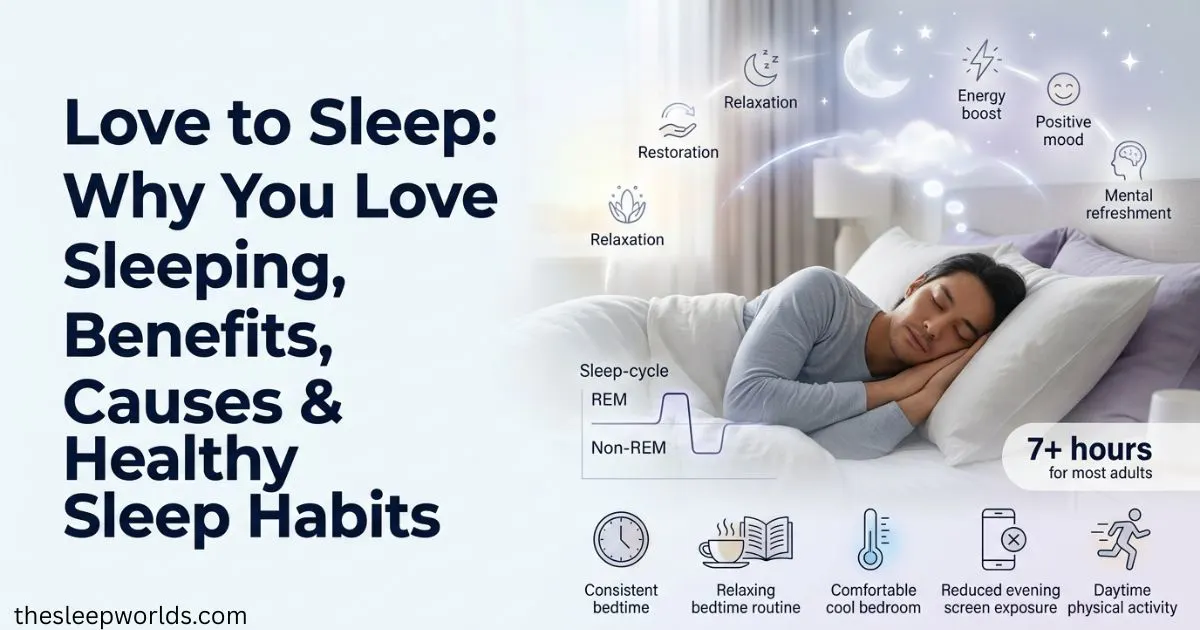
Love to sleep karna usually normal hai because sleep is an essential biological need, not simply a luxury or a sign of laziness. Sleep helps the body recover, supports brain function, memory, mood, attention, and overall health. For most adults ages 18–60, the CDC recommends at least 7 hours of sleep per night.
At the same time, there is an important difference between enjoying sleep and needing excessive amounts of sleep because you remain tired or sleepy during the day. If someone regularly sleeps for a long time but still feels exhausted, repeatedly struggles to wake up, or experiences significant daytime sleepiness, the quality of sleep and possible underlying causes deserve attention.
What Does Love to Sleep Mean?
Love to sleep generally means enjoying the feeling of sleeping, looking forward to bedtime, preferring extra rest, or feeling especially comfortable and relaxed while sleeping.
Sleep itself is essential. The CDC describes good sleep as important for both physical health and emotional well-being. Adequate sleep can support attention, memory, mood, heart health, metabolism, and the body’s ability to function properly.
Therefore, enjoying sleep is not inherently unhealthy. In many cases, it simply reflects a preference for a relaxing and restorative activity.
Loving Sleep vs. Sleeping Too Much
These are not the same thing.
| Loving Sleep | Excessive Sleepiness |
| Enjoying bedtime | Struggling to stay awake |
| Looking forward to sleeping | Falling asleep unintentionally |
| Feeling refreshed afterward | Remaining tired after sleeping |
| Sleeping an appropriate amount | Regularly needing unusually long sleep |
| Able to function normally during the day | Daytime functioning is affected |
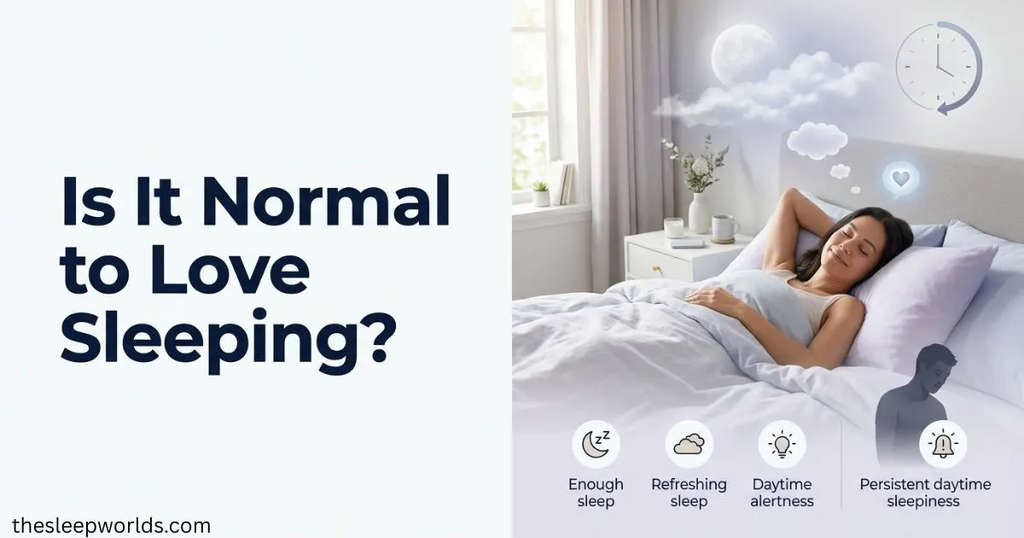
The key question is not simply “Do I love sleep?” but “How do I feel and function when I am awake?”
Why Do People Love to Sleep?
There are several normal reasons people may strongly enjoy sleep.
Sleep Feels Restorative
After a demanding day, sleep provides an opportunity for the body and brain to recover. This can make bedtime feel particularly rewarding when someone has been physically or mentally active.
Sleep Provides Relaxation
A comfortable bed, quiet room, darkness, and familiar bedtime routine can create a strong sense of relaxation.
For some people, bedtime becomes one of the few periods during the day without work, school, social demands, or digital distractions.
Your Body May Simply Need More Sleep
Sleep needs vary between individuals. Age, lifestyle, activity levels, health, stress, and accumulated sleep loss can all influence how much sleep a person needs.
The CDC recommends 7 or more hours for adults ages 18–60, 7–9 hours for adults ages 61–64, and 7–8 hours for adults 65 and older.
Is It Normal to Love Sleeping?
Yes. Enjoying sleep is completely normal.
In fact, regularly getting sufficient sleep is healthier than deliberately restricting sleep simply because you think sleeping less is more productive.
Recent CDC data show that in 2024, 30.5% of U.S. adults reported sleeping fewer than seven hours on average in a 24-hour period, while only 54.8% reported waking feeling well-rested most days or every day.
This means that for many adults, getting enough high-quality sleep is already a challenge.
How Much Sleep Should You Get?
Your ideal sleep duration depends primarily on age.
| Age | Recommended Sleep |
| Newborns, 0–3 months | 14–17 hours |
| Infants, 4–12 months | 12–16 hours including naps |
| Toddlers, 1–2 years | 11–14 hours including naps |
| Preschool, 3–5 years | 10–13 hours |
| School age, 6–12 years | 9–12 hours |
| Teenagers, 13–17 years | 8–10 hours |
| Adults, 18–60 years | 7+ hours |
| Adults, 61–64 years | 7–9 hours |
| Adults, 65+ | 7–8 hours |
These are CDC recommendations, and individual sleep needs can vary.
What Are the Benefits of Loving Sleep?
If loving sleep simply means valuing and prioritizing healthy rest, it can be a positive habit.
Better Attention and Memory
Adequate sleep supports attention and memory, which are important for learning, work, driving, and everyday decision-making.
Better Mood
Good sleep can support emotional well-being and help the brain regulate mood.
Physical Recovery
Sleep provides time for the body to restore and replenish resources after daily physical and mental demands.
Better Overall Health
Consistently obtaining sufficient sleep is associated with better health, while insufficient sleep is associated with a range of adverse health outcomes.
Why Do I Love Sleeping So Much?
Sometimes a strong desire to sleep simply means you enjoy rest. But if your desire for sleep is accompanied by persistent tiredness, there may be another explanation.
Possible contributors include:
- Not getting enough sleep at night
- An inconsistent sleep schedule
- Poor sleep quality
- Frequent nighttime awakenings
- Stress
- Certain medications
- Alcohol or other substances
- Sleep disorders
- An uncomfortable sleep environment
- Circadian rhythm disruption
CDC data from 2024 found that 18.1% of U.S. adults reported trouble staying asleep most days or every day, demonstrating that sleep quantity and sleep quality are separate issues.
Why Do I Want to Sleep All Day?
Wanting to sleep occasionally, especially after a stressful or sleep-deprived period, is not necessarily concerning.
However, persistent daytime sleepiness is different from simply enjoying sleep.
If you regularly need to sleep during the day, unintentionally fall asleep, or remain sleepy despite getting enough nighttime sleep, it can be worth discussing with a healthcare professional.
Possible causes can include inadequate sleep, disrupted sleep, medications, or sleep disorders.
Sleeping Longer but Still Feeling Tired
One of the most important warning signs is sleeping for what seems like a sufficient amount of time but consistently waking unrefreshed.
CDC identifies repeated nighttime waking and feeling tired or sleepy despite enough sleep as signs of poor sleep quality.
In that situation, simply adding more hours in bed may not address the underlying problem.
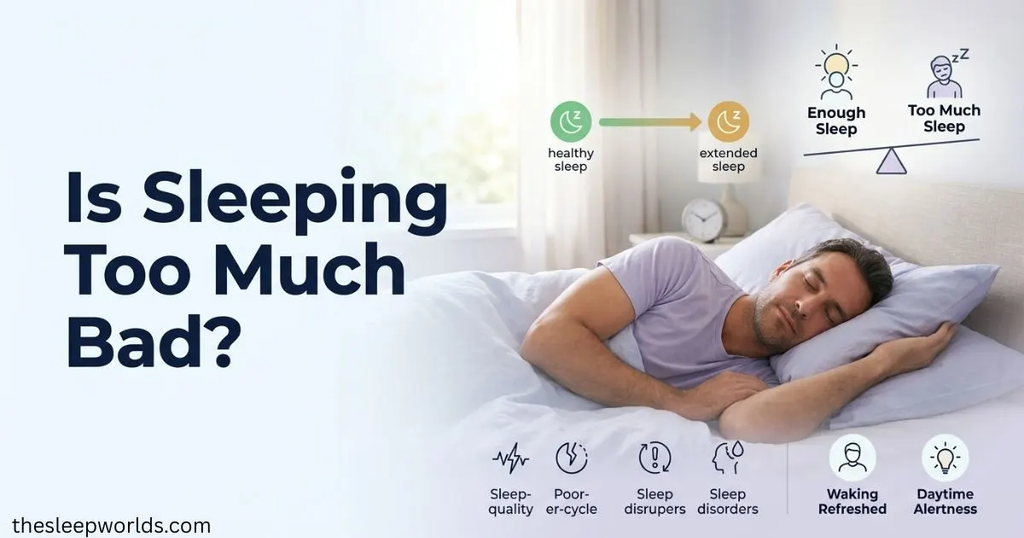
Is Sleeping Too Much Bad?
There is no single number of hours that automatically means someone is “sleeping too much.” Sleep requirements vary with age and individual circumstances.
Occasionally sleeping longer after illness, intense physical activity, travel, or sleep deprivation can be normal.
The more relevant issue is whether unusually long sleep is persistent and accompanied by excessive daytime sleepiness, difficulty functioning, or unrefreshing sleep.
If that pattern continues, discussing it with a healthcare professional can help determine whether there is an underlying sleep or health issue.
Love to Sleep but Hate Waking Up?
Many people enjoy sleeping but dislike the transition from sleep to wakefulness.
This can be especially noticeable when an alarm interrupts sleep or when someone has an irregular schedule.
A consistent wake time, sufficient sleep opportunity, morning daylight, and a predictable morning routine can make waking easier.
How to Make Waking Up Easier
Try:
- Going to bed at a consistent time
- Waking at approximately the same time every day
- Getting natural light soon after waking
- Avoiding repeated snoozing
- Preparing for the morning the night before
- Giving yourself enough time to sleep
- Keeping your alarm away from the bed if necessary
Consistency can help align sleep with the body’s circadian rhythm.
How to Love Sleep in a Healthy Way
There is nothing wrong with enjoying sleep. The goal is to make sleep a healthy part of your routine rather than allowing it to interfere with daytime life.
Create a Relaxing Bedtime Routine
A predictable wind-down period can help signal that the day is ending.
You might:
- Dim the lights
- Read a book
- Take a warm shower
- Practice gentle stretching
- Listen to calming music
- Put away stimulating devices
CDC recommends turning off electronic devices at least 30 minutes before bedtime.
Keep Your Bedroom Comfortable
CDC recommends keeping the bedroom quiet, relaxing, and cool.
A comfortable mattress, supportive pillow, appropriate temperature, darkness, and reduced noise can all contribute to better sleep conditions.
Keep a Regular Schedule
Going to bed and waking up at approximately the same time every day can support healthy sleep habits.
A consistent schedule can be especially helpful if you frequently sleep much later on weekends than on weekdays.
Love to Sleep vs. Laziness
Enjoying sleep should not automatically be described as laziness.
Sleep is a biological requirement. The body and brain need adequate sleep to function properly, and intentionally reducing sleep for productivity can create sleep debt.
A person who prioritizes healthy sleep may actually be protecting their daytime attention, memory, mood, and physical functioning.
The better question is whether sleep is supporting your life or preventing you from living it.
Can You Love Sleep Too Much?
It is possible for sleep or sleepiness to become excessive enough to interfere with daily activities.
Potential warning signs include:
- Frequently sleeping through alarms
- Regularly needing long daytime naps
- Falling asleep unintentionally
- Difficulty staying awake while reading or watching TV
- Persistent daytime fatigue
- Sleeping for long periods but remaining unrefreshed
- Sleep interfering with work, school, relationships, or activities
These symptoms do not automatically identify a particular condition, but persistent excessive sleepiness deserves attention.
Love to Sleep and Sleep Quality
The quality of sleep matters just as much as the amount.
A person may spend eight hours in bed but experience frequent awakenings. Another person may sleep for a similar amount of time with fewer interruptions and wake feeling more refreshed.
CDC describes quality sleep as uninterrupted and refreshing sleep and identifies difficulty falling asleep, repeated nighttime awakenings, and daytime tiredness as signs of poor sleep quality.
Therefore, healthy sleep is about both quantity and quality.
When Should You Talk to a Doctor?
Consider talking with a healthcare professional if you regularly have sleep problems or experience excessive daytime sleepiness.
This is particularly important if you:
- Sleep enough but remain very tired
- Frequently wake during the night
- Have persistent difficulty falling asleep
- Snore loudly
- Wake gasping or choking
- Fall asleep unintentionally during the day
- Have sleep problems that interfere with daily life
CDC recommends speaking with a healthcare provider when sleep problems occur regularly or symptoms of sleep disorders are present.
Love to Sleep: A Healthy Sleep Checklist
If you genuinely love to sleep, use that preference to build healthier habits:
| Habit | Goal |
| Sleep duration | Get age-appropriate sleep |
| Bedtime | Keep it reasonably consistent |
| Wake time | Keep it consistent |
| Bedroom | Quiet, dark, comfortable, cool |
| Devices | Turn them off before bed |
| Caffeine | Avoid late-day caffeine |
| Alcohol | Avoid using it as a sleep aid |
| Exercise | Stay physically active |
| Daylight | Get natural light during the day |
| Daytime sleepiness | Pay attention to persistent symptoms |
The goal is not to sleep as many hours as possible. The goal is to get enough high-quality sleep to feel rested and function well while awake.
Conclusion
Love to sleep is not necessarily a bad thing. Sleep is an essential biological process that supports physical health, emotional well-being, memory, attention, and everyday functioning. For most adults ages 18–60, getting at least seven hours of sleep is recommended, and healthy sleep should include both sufficient duration and good quality.
The important distinction is between enjoying sleep and being excessively sleepy. If you love spending time in bed but wake refreshed and function normally during the day, there may be little reason for concern. However, if you regularly sleep for long periods, struggle to wake up, fall asleep unintentionally, or remain exhausted despite adequate sleep, the issue may be sleep quality or an underlying condition rather than simply “loving sleep.”
A consistent sleep schedule, comfortable bedroom, regular physical activity, daytime light, and a relaxing bedtime routine can help turn your love of sleep into a healthy sleep habit.
FAQs
Is it normal to love sleep?
Yes. Enjoying sleep and looking forward to bedtime is normal. Sleep is essential for physical and mental health, so valuing adequate rest is generally a healthy habit.
Why do I love sleeping so much?
You may simply enjoy relaxation and rest, or your body may be recovering from insufficient or poor-quality sleep. Persistent excessive sleepiness can have other causes and may warrant professional evaluation.
Is loving sleep a sign of laziness?
No. Sleep is a biological necessity, and getting enough sleep is important for health, attention, memory, and mood.
How many hours should I sleep?
Most adults ages 18–60 should get at least seven hours per night. Adults 61–64 generally need 7–9 hours, while adults 65 and older generally need 7–8 hours.
Why do I want to sleep all day?
Occasional extra sleep can happen after sleep loss or demanding periods. Persistent daytime sleepiness, especially despite adequate nighttime sleep, can be associated with poor sleep quality, medications, lifestyle factors, or sleep disorders.
Why do I love sleeping but hate waking up?
Sleep inertia, an irregular sleep schedule, insufficient sleep, or waking at an inconvenient point in the sleep cycle can make mornings difficult. A consistent schedule and adequate sleep opportunity may help.
Is sleeping 10 hours a night too much?
Not necessarily. Sleep needs vary, and occasional longer sleep can be normal. Regularly needing very long sleep while remaining tired or sleepy during the day is more important to investigate.
Can loving sleep be healthy?
Yes. Prioritizing adequate sleep can support health. The goal is to obtain enough restorative sleep without allowing excessive sleepiness to interfere with daytime life.
Why am I still tired after sleeping 8 hours?
Possible reasons include fragmented sleep, an inconsistent schedule, poor sleep quality, medications, lifestyle factors, or an underlying sleep disorder. Persistent tiredness should be discussed with a healthcare professional.
How can I enjoy sleep without oversleeping?
Set a consistent bedtime and wake time, give yourself enough sleep opportunity, get morning light, stay active during the day, and avoid using bed as a place for prolonged daytime inactivity.
Related Articles

Ryan Foster is a curious and dedicated professional with an interest in digital content, lifestyle, and online research. He enjoys exploring useful ideas, learning about new topics, and sharing practical information with others. Ryan values continuous learning, creativity, and building meaningful connections through the digital world.