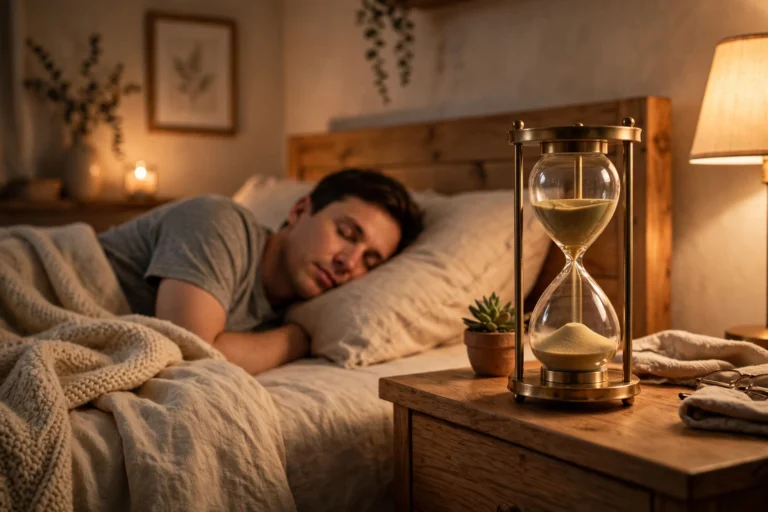

Sleep When You Can: A Guide to Opportunistic Rest
Not everyone gets a perfect eight hours in a dark, quiet bedroom. Shift workers, new parents, students, caregivers: millions of people must sleep when you can, grabbing rest in fragments whenever life allows. The good news: opportunistic rest, done smartly, genuinely works.
This is not about glorifying sleep deprivation. It is about practical strategy for imperfect schedules: how to nap effectively, how to protect your core sleep, and how to make fragmented rest add up to something real.

Sleep When You Can: The Art of Opportunistic Rest
To sleep when you can means treating rest as something you collect in available moments rather than a single nightly block. A 20-minute nap here, an earlier bedtime there, a protected anchor of core sleep every day: it all counts.
Researchers who study shift workers and military personnel have learned that total sleep across 24 hours matters enormously. While one unbroken block is ideal, well-planned fragments beat chronic short sleep every time.
Why Perfect Nights Are Not the Only Way
Sleep advice usually assumes a 10 PM to 6 AM life. But nurses, factory workers, new parents, and emergency responders live differently. Telling them to “just sleep 8 hours” is useless; they need tactics for the life they actually have.
The opportunistic approach accepts reality: your main sleep may be shorter or shifted, so you build a system of naps and protected rest windows around it. Imperfect sleep, strategically managed, keeps you far healthier than the same shortfall endured passively.
The Power Nap: 10-20 Minutes That Work
The short nap is the crown jewel of opportunistic rest. Ten to twenty minutes of light sleep boosts alertness, mood, and performance for hours, without the grogginess of deeper sleep. NASA’s famous nap studies found even brief naps measurably improved pilot performance.
Timing matters: nap in the early afternoon dip (roughly 1-3 PM) when the body naturally wants rest. Set an alarm: the whole point is to wake before sinking into deep sleep, which brings sleep inertia.
Sleep When You Can: Nap Lengths and Trade-offs
| Nap length | Benefits | Risks |
|---|---|---|
| 10-20 min | Quick alertness boost, minimal grogginess | Very few |
| 30 min | Deeper refresh | Some grogginess on waking |
| 60 min | Memory benefits, some deep sleep | Significant grogginess possible |
| 90 min | Full sleep cycle, like a mini-night | Can steal from nighttime sleep |
Who Needs Opportunistic Sleep Most?
Shift Workers
Night shifts fight the body clock directly. Strategic napping before shifts, an anchor sleep of 4+ hours at a consistent time daily, and bright light management make shift work far more sustainable.
New Parents
“Sleep when the baby sleeps” is cliché because it works. Short naps during the day plus shared night duties protect at least one parent’s core sleep. This phase is temporary; protect it fiercely while it lasts.
Students and Caregivers
Anyone with unpredictable demands benefits from treating rest as portable. A quiet room, an eye mask, and 20 protected minutes can rescue an otherwise sleepless day.

Sleep When You Can: Napping Rules That Protect Night Sleep
- Nap before 3 PM so nighttime sleep pressure survives
- Keep naps to 10-20 minutes unless you plan a full 90-minute cycle
- Nap in a dark, quiet spot: even a parked car with an eye mask works
- Always set an alarm; unplanned naps become two-hour sleep thieves
- Caffeine right before a short nap (“coffee nap”) can sharpen the wake-up
- Do not nap to avoid fixing a broken nighttime routine
The Anchor Sleep Strategy
The single most stabilizing tactic for chaotic schedules is anchor sleep: a core block of at least 4 hours at the same time every day, no matter what. The body clock can anchor to this block even when the rest of sleep moves around.
Everything else, naps, extra hours, catch-up sleep, supplements the anchor rather than replacing it. Shift workers who keep a steady anchor report dramatically better adaptation than those whose sleep scatters randomly.
Sleep When You Can: Building Rest Into Chaos
| Situation | Strategy |
|---|---|
| Night shift tonight | 90-min nap before the shift; anchor sleep after |
| Newborn at home | 20-min naps when baby sleeps; split night duties |
| Exam week | Protect a 6-hour core; add one 20-min afternoon nap |
| Long drive day | 20-min rest stop nap before drowsiness hits |
| Rotating shifts | Anchor sleep fixed; light therapy for transitions |
When Napping Signals a Problem
Strategic napping is healthy; compulsive napping can be a warning. If you need multiple long naps daily despite adequate nighttime opportunity, or you fall asleep unintentionally in conversations or while driving, look deeper.
Loud snoring with gasping, persistent exhaustion, or sudden irresistible sleep attacks deserve professional evaluation. Naps should supplement healthy sleep, not compensate for a disorder.
Conclusion
Learning to sleep when you can is a survival skill for real life. Short naps, anchor sleep, and smart timing turn fragmented schedules from a health disaster into a manageable challenge.
Use these tactics as long as you need them. And keep working toward steadier nights when life allows. If overwhelming sleepiness persists despite strategy, or comes with warning signs like snoring or gasping, discuss it with a healthcare professional.
FAQs
Are naps as good as nighttime sleep?
Not entirely: consolidated nighttime sleep has unique benefits. But well-planned naps meaningfully add to total 24-hour sleep and beat skipping rest altogether.
What is the ideal nap length?
10-20 minutes for a quick boost without grogginess. Ninety minutes works if you want a full cycle, but protect it from stealing nighttime sleep.
What is anchor sleep?
A core block of at least 4 hours of sleep at the same time daily. It stabilizes the body clock even when the rest of your sleep schedule is irregular.
Do naps ruin nighttime sleep?
Long or late naps can. Short naps before mid-afternoon rarely harm nighttime sleep and often improve the day enough to protect the night.
Is it okay to nap every day?
Yes, if naps are short, well-timed, and supplement adequate nighttime sleep. Cultures with daily siestas show it can be a healthy lifelong habit.
What is a coffee nap?
Drinking coffee right before a 15-20 minute nap. The nap clears some adenosine while caffeine kicks in, so you wake sharper than with either alone.
When should napping worry me?
If you need frequent long naps despite sleeping enough at night, fall asleep unintentionally, or snore loudly with gasping, seek professional evaluation.
Related reading: You Want to Sleep All the Time? | One Sleep | Sleep: How to Sleep Faster Better
Related Articles

Ryan Foster is a curious and dedicated professional with an interest in digital content, lifestyle, and online research. He enjoys exploring useful ideas, learning about new topics, and sharing practical information with others. Ryan values continuous learning, creativity, and building meaningful connections through the digital world.