World Sleep Day 2025 Date, Theme, Facts & Sleep Tips
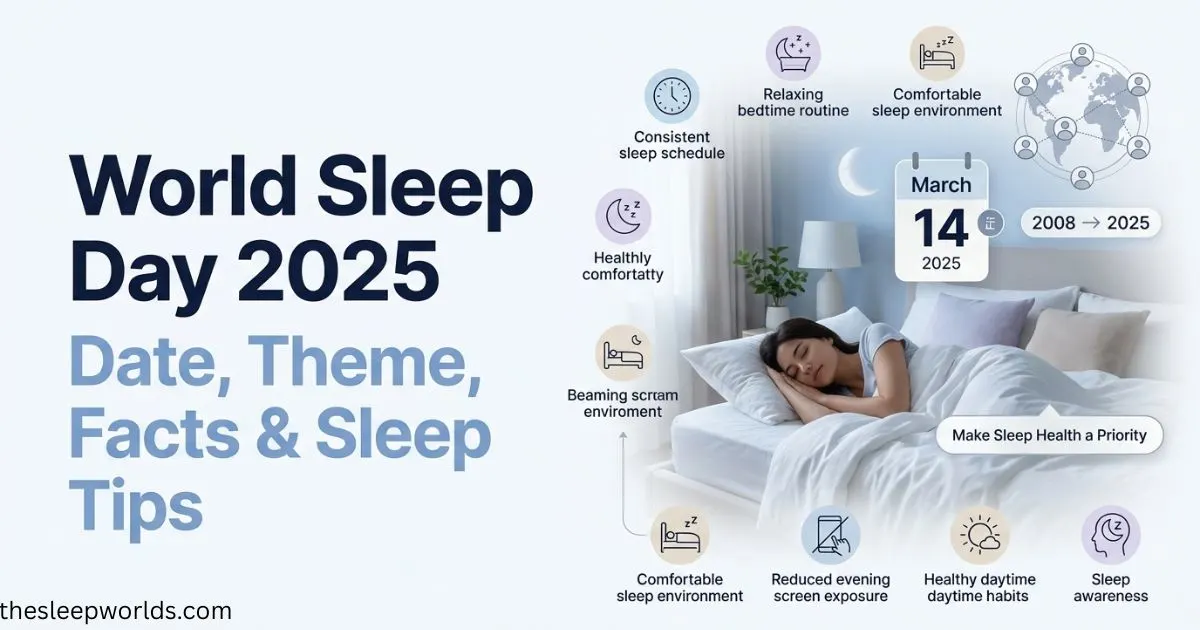
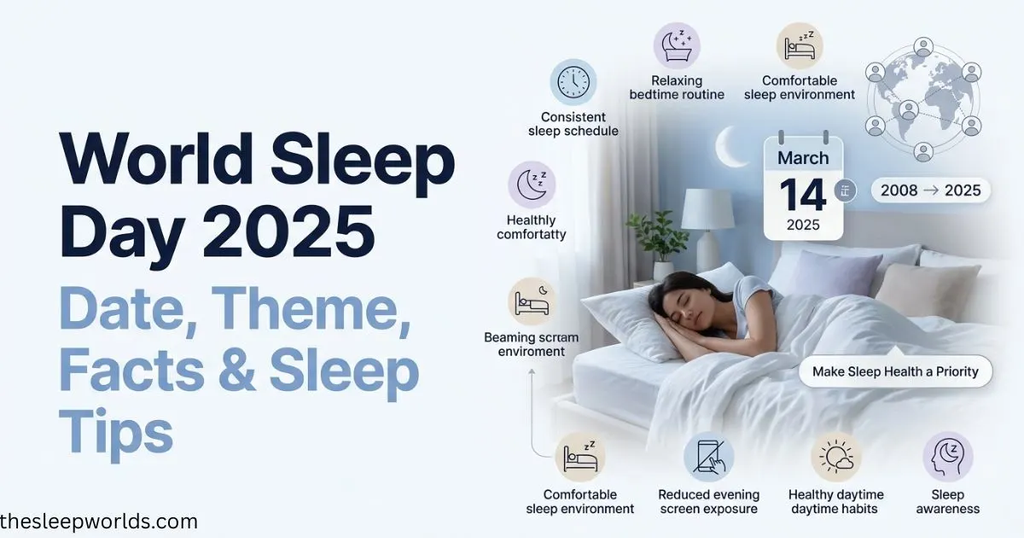
World Sleep Day 2025 was observed on Friday, March 14, 2025, with the official theme “Make Sleep Health a Priority.” For anyone juggling work, family, screens, stress, or restless nights, the message was simple: sleep is part of health, not an optional luxury.
The annual observance, led by the World Sleep Society, brings together sleep health professionals, researchers, healthcare workers, families, and communities to discuss healthy sleep, sleep disorders, sleep hygiene, and quality of life. After researching sleep-awareness campaigns and their practical recommendations, one point stands out: better sleep rarely begins with a dramatic change. It usually begins with a consistent bedtime, a calmer sleep environment, and recognizing when poor sleep needs attention.
What Is World Sleep Day 2025 and When Is It Celebrated?
World Sleep Day 2025 was held on March 14, continuing an annual global awareness event associated with the World Sleep Society. It focuses on sleep health, sleep disorders, healthy sleep habits, sleep education, and the relationship between restorative sleep and overall well-being.
The observance is traditionally scheduled on the Friday before the Spring Equinox. Its purpose is broader than simply celebrating sleep: it encourages conversations about sleep quality, sleep deprivation, healthcare, research, and practical sleep hygiene. The 2025 campaign connected these ideas through a direct message about making sleep health a priority.
World Sleep Day 2025: Date & Theme
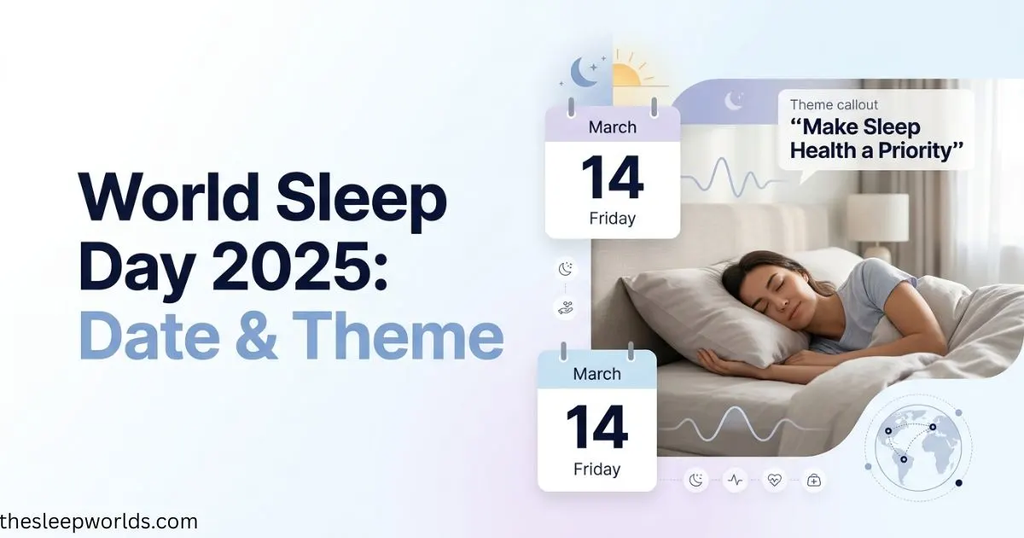
The date for World Sleep Day 2025 was Friday, March 14, and its official theme was “Make Sleep Health a Priority.” The World Sleep Society promoted the theme as a call to recognize sleep as a fundamental component of health alongside nutrition and physical activity.
The theme also reflected a broader understanding of healthy sleep. Duration matters, but so do regularity, timing, efficiency, alertness, and perceived quality. That makes the message relevant whether someone is dealing with occasional poor sleep, an inconsistent schedule, screen-heavy evenings, or a suspected sleep disorder.
World Sleep Day 2025 Significance
World Sleep Day 2025 highlighted why sleep deserves attention in everyday life. Healthy sleep supports physical health, cognitive function, emotional well-being, immune function, memory, and daily performance. Poor sleep can also be associated with health concerns ranging from metabolic problems to cardiovascular conditions.
For many people, the most meaningful part is practical: sleep affects how tomorrow feels. A restless night can make concentration harder and patience thinner, while consistent restorative sleep can make ordinary tasks feel considerably easier. That everyday experience is why sleep health awareness extends beyond hospitals and laboratories.
Impact of Lack of Sleep on Kids and Adults on World Sleep Day 2025
Sleep needs differ by age, and insufficient sleep can affect children and adults differently. Children may experience difficulty concentrating, mood changes, behavioral problems, or challenges with learning, while adults may notice fatigue, reduced alertness, memory problems, irritability, or diminished productivity.
Recommended Sleep Norms by Age
Recommended sleep duration varies considerably across life stages. Infants generally need substantially more sleep than teenagers, while adults typically require at least seven hours per night. Looking at sleep through age-appropriate recommendations helps families distinguish normal variation from consistently inadequate rest.
Signs of Lack of Sleep in Children and Adults
Sleep deprivation does not always look like someone simply falling asleep. Children can become unusually irritable, inattentive, hyperactive, or clumsy, while adults may experience persistent yawning, daytime sleepiness, forgetfulness, mood changes, or difficulty concentrating. Repeated problems deserve attention rather than being dismissed as ordinary tiredness.
World Sleep Day 2025 Activities – How to Celebrate
World Sleep Day activities can be surprisingly simple. Communities, schools, healthcare organizations, workplaces, and families can share sleep-health information, organize educational sessions, discuss sleep disorders, participate in awareness campaigns, or simply use the occasion to examine their own sleep routines.
The World Sleep Society’s 2025 campaign encouraged advocates to share information online, connect with their communities, and use official educational resources. More than 600 volunteer organizers across 76 countries had committed to activities surrounding the 2025 observance, demonstrating how the campaign extended far beyond a single location.
Essential Tips for Better Sleep Quality on World Sleep Day 2025
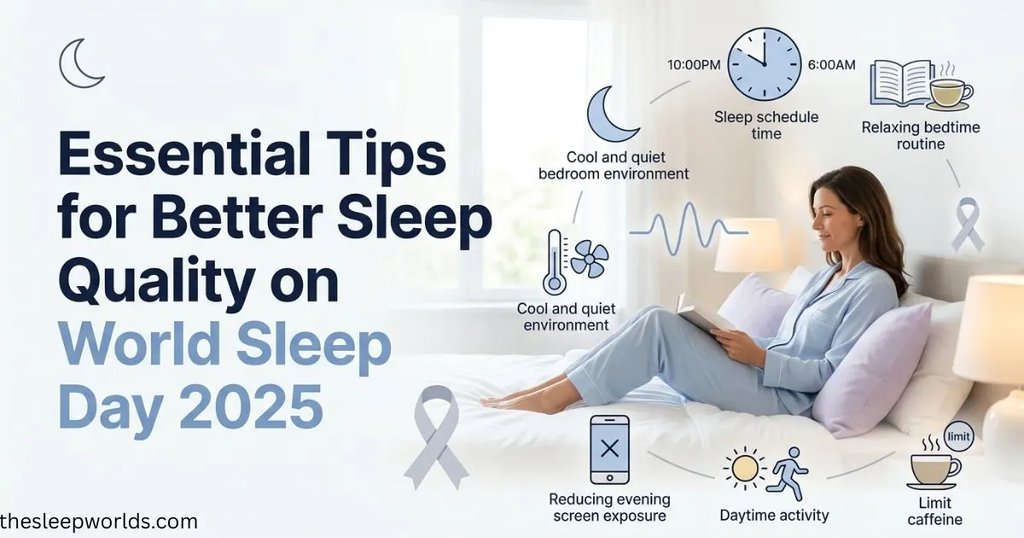
Improving sleep quality often starts with practical sleep hygiene: establish a regular sleep schedule, create a comfortable bedroom, reduce stimulating screen use before bed, and give your mind time to slow down. Small changes are generally easier to maintain than an unrealistic overnight transformation.
For families, the same principle applies. A predictable bedtime, dimmer evening lighting, fewer digital distractions, and relaxing activities such as reading can create a clearer transition between daytime activity and sleep. If persistent insomnia, breathing problems, unusual movements, or severe daytime sleepiness continue, professional evaluation may be appropriate.
How to Improve Sleep Quality in Kids and Adults
Better sleep quality can involve both the sleep environment and daytime behavior. Keep the bedroom dark, quiet, and comfortable; maintain consistent sleep and wake times; moderate late-day caffeine; and create a calming pre-bed routine. Children often benefit from predictable routines, while adults may need stronger boundaries around work and technology.
How to Sleep Better on World Sleep Day 2025
Wind down
A relaxing transition into bedtime can make sleep feel less abrupt. Reading, gentle stretching, a warm bath, journaling, or another quiet activity can help separate the evening from the demands of the day. Avoiding caffeine close to bedtime can also support the transition toward sleep.
Keep it consistent
Consistency gives the body’s sleep-wake system a predictable pattern. Going to bed and waking at roughly similar times each day can make it easier to anticipate sleep. The goal isn’t perfection; it is creating a rhythm that remains realistic enough to follow on ordinary weekdays and weekends.
Tech-no
Phones, tablets, computers, and endless scrolling can make bedtime harder to protect. Creating a screen-free period before sleep can reduce stimulation and make winding down easier. Night-mode settings can change display characteristics, but they do not replace the broader benefit of stepping away from stimulating digital activity.
Fit and healthy
Regular physical activity is part of a healthy lifestyle and can support better sleep, although intense exercise immediately before bedtime may not suit everyone. Earlier exercise, daylight exposure, and gentle evening movement can help establish a healthy day-night rhythm without turning bedtime into another demanding task.
Conclusion
World Sleep Day 2025 was more than a date on the calendar: it was a global reminder that sleep health deserves the same everyday attention as nutrition, physical activity, and other foundations of well-being. The March 14 observance centered on “Make Sleep Health a Priority,” and the World Sleep Society’s official campaign encouraged people and communities to turn that message into practical action.
For readers searching after the 2025 observance, the key facts remain straightforward: World Sleep Day 2025 was March 14, its theme was “Make Sleep Health a Priority,” and its purpose was to increase awareness of healthy sleep and sleep-related problems.
FAQs
When was World Sleep Day 2025?
World Sleep Day 2025 was Friday, March 14, 2025. It was the annual global sleep-health awareness observance associated with the World Sleep Society.
What was the theme of World Sleep Day 2025?
The official 2025 theme was “Make Sleep Health a Priority.” The message emphasized treating sleep as an important part of health and well-being rather than something that can routinely be sacrificed.
Why is World Sleep Day important?
World Sleep Day raises awareness about healthy sleep, sleep disorders, sleep deprivation, sleep hygiene, and the importance of sleep for overall health. It also provides an opportunity for healthcare professionals, researchers, organizations, and communities to discuss sleep-related challenges.
How can people participate in World Sleep Day?
People can participate by learning about sleep health, sharing reliable sleep information, attending educational activities, discussing sleep concerns with healthcare professionals when appropriate, and making a practical improvement to their own sleep routine.
What sleep disorders are highlighted by World Sleep Day?
Sleep-awareness campaigns commonly discuss conditions such as insomnia, obstructive sleep apnea, restless legs syndrome, narcolepsy, and other sleep-wake disorders. Persistent symptoms should be discussed with an appropriate healthcare professional rather than self-diagnosed.
How many hours of sleep do adults need?
For most adults, at least seven hours per night is a commonly recommended minimum. Individual needs can vary, and sleep quality, regularity, timing, and daytime alertness also matter when evaluating overall sleep health.
Why does World Sleep Day occur in March?
World Sleep Day is traditionally held on the Friday before the Spring Equinox. In 2025, that placed the observance on March 14. The timing provides a recurring annual point for global sleep-health education and awareness.
Related Articles

Ryan Foster is a curious and dedicated professional with an interest in digital content, lifestyle, and online research. He enjoys exploring useful ideas, learning about new topics, and sharing practical information with others. Ryan values continuous learning, creativity, and building meaningful connections through the digital world.